As of this morning, I have reached the ultimate level of hippie-do-gooder-earth-loving-corporate-tool: the bike commuter.
Now granted, I'll tell you right now that I didn't schlep my wheels onto the train and ride across I90. That's on the plan for spring (or perhaps sooner if some very nice day comes along when I'm feeling adventurous and don't have anything on my calendar at work). What I did was go downhill from my house (which is at an elevation of approximately 250 feet above sea level) to the Edmond's train station which is, for all practical purposes, at se level. The total trip was about a mile, which means an average of a 5% downslope. I probably pedaled about twenty times until I reached the parking lot.
But damn you all, I'm going to wear my ankle strap with pride today!
That's ankle strap as in reflective-velcro-tie-to-keep-right-pant-cuff-clean and not ankle bracelet as in under-house-arrest-Martha-Stewart.
So, from my one mile bike commute, I have the following observations:
The Edmonds train station needs a bike rack. I am currently chained to a AC power conduit attached to a phone pole. It works, but feels rather makeshift in this day of REI specialty gear for every application. I figure, however, that the "massive electrical voltage and instant death inside" sticker affixed to the power conduit (I paraphrase) effectively acts as a theft deterrent.
Someone would be well advised to make nice dress shoes with Shimano compatible cleats in the bottom. Since it was a short (downhill) ride I just rode on my little stubby pedals rather than bring a change of footwear. We'll see how that goes on the uphill.
I need a new coffee mug. The disposable I brought with me from home kept spurting out over bumps despite my best efforts to seek stability. But when you're doing 22mph down a bumpy road coming up on a six lane intersection, coffee (amazingly) takes second priority. I was afraid that my left arm was going to look like the oil stained cowling of some World War Two bomber, what with all the coffee blow back, but in the end the damage was unnoticeable. What's more is how can I claim to my bike commuter green if I'm tossing out my beverage container every day? So now I need a closable, reusable, thermal mug (Erica, should you read this, I'd like to mention the wonderful collection of thermal mugs with witty sayings on them at the new PCC).
Riding (on the aforementioned 22mph bumpy downhill and other parts) with my laptop bag over my shoulder and my insulated lunch bag clipped to it turned out to be much easier than I expected. I haven't lost all of that Davis California growing-up-on-a-bike ease that I once had. That felt good.
The morning downhill was one of the most peaceful and relaxing times I've had recently. Gulls cawing, ferry boats tooting, the sun gently reflecting off of the clouds. And hardly a car on the road.
Cutting the one mile car ride out of my day may not seem like its doing that much for the pocketbook, the carbon debt in particular or the environment in general, the dependance on foreign oil, or any of those other hot buttons. But my dad always taught me that the toughest part of a car's life, from the maintenance, efficiency, and lifespan points of view is that initial startup and first few miles. So though it only saves a little bit, it saves a little bit.
If I keep this up (and by that I mean "actually ride back up the hill") I'll start to get in shape in no time -- and then yeah, I90 will be on the menu. Then I'll be sporting the the replica Discovery Channel team jersey and taking advantage of the new company provided bike locker and shower facilities and really putting the package together. Until then, I'm happy to be doing my own little thing, making my own little difference and having some fun on the way.
Showing posts with label biking. Show all posts
Showing posts with label biking. Show all posts
Thursday, September 11, 2008


Friday, August 1, 2008
Not with a bang, but with a whimper
Or, what Nick does on his day off...
So I often suspect that my tangential blog titling tends to screw up the searchability of my writings. Given my odd range of interests, this entry is as likely to be about an obscure German cryptosystem as it is to be about Aerojet's AMBR high-performance 890N deep space bipropellant engine, something which I have recently decided is an Important Part of my personal space program.
In this case, however, it is actually about something I did physically. Shocking, I know. There will be thoughtful musings on everything from gloves to the design of bike trails, but for the most part it will be a story of physical effort and, above all, physical woe. It will also, briefly, mention my groin, though I will give everyone fair warning if they want to avoid that part. It is a style of recounting-an-adventure that is familiar to readers of Erica's fitness blog.
Having realized that my "family vacation" centered month of August was upon us and that, between Erica's triathlon addiction and, even more dramatically, my increasingly complex work schedule, the "family vacation" value had been effectively reduced to three days, I took today off from work. I approached my boss and, very nicely, asked her for time off. She very nicely granted it. I love my job.
We decided to go for a bike ride, to try the Interurban trail from Edmonds (actually from our front door) all the way up to Everett. A distance of something like twenty miles each way. The motivation was that this was (1) very different from what I usually do on a weekday and (2) the Interurban was a place that would be hard to ride with Bella in tow and (3) that going on an adventure is a long standing tradition in our relationship and something we hadn't done in a while.
So off we set. I had three eggs (fried) and two cups of coffee. The scanty breakfast was motivated by my vision for the ride: a European cyclo-perambulation. The sort of thing I picture people in the Netherlands or other bits of that lovely collection of small countries in the Northwest corner of Europe doing all the time. Riding along in nice travelin' bikes, stopping periodically in cafés to enjoy coffees, sandwiches, beers, and moules frites.
The first part of the ride was the hardest. Something like 250 feet of elevation gain in what feels like 250 feet. So I admitted that I wasn't up to it and just walked it. Then things got easier -- a little in the gentle undulation department and then we hit the entrance to the Interurban.
Now for those of you unfamiliar with the Interurban, it is a little like the Balkans. As in "Balkanized." The idea is of a trail that runs from Seattle to Everett, along the old Interurban trolly line. This would work great if all of the little communities on the way had gotten with the program and started building an actual trail before land development came along and swallowed up some stretches of the old line. Edmonds, I am sad to say, has an Interurban stretch on its N-year plan, but it always appears to be N years out.
So we hit the trail, right by a discarded shopping cart from the Ranch Market nearby. The trail was fine and fun, gently rolling and pretty well paved. It was punctuated by an irritating number of stops for crossing streets that involved varying degrees of slowing, stopping, and chicaning around bollards and horse gates of various descriptions. "Whee, my speed is getting up, I'm feeling good...and I'm slowing down..."
This was great for Erica who wanted to work on her shifting/starting/stopping/clipping drills, but was a little irritating for me who was trying to deal with my more-out-of-shape-than-I-thought-I-was issues. Momentum is the cyclists friend...
Then, with an almost cinematic lack of warning, we were at the Alderwood mall, or very near to it. Here, things got ugly. Someone thinks that the stretch of 200th Street SW that runs right by Buca di Beppo just before it turns into the Alderwood Mall Parkway is a bike trail. Presumably, this person has never ridden a bicycle outside of a spin class, if that much. The sidewalk is about three feet wide and punctuated by huge chunks of disturbed concrete where tree roots have pushed it up, entrances to parking lots, and various kinds of cryptic electrical boxes. Don't go calling me a wimp and saying I should have ridden on the street. Two fast turning lanes with no shoulder, lots of patches, and angry youths driving pickup trucks (I'd be angry if I was a youth driving a pickup truck and had to pay for my own gas, what with the salary of the average Red Robin busser...).
So we walked. Which was fine, but I'd actually been feeling pretty good. Bikeridus interruptus continues. Then there was an overpass -- nice gentle up, nice gentle down. And by that I mean ridable up and 28.5 mph down while pausing to drink some H20. And I'm riding a flat bar hybrid, mind you, so aero forces were definitely in play.
Whee fun and then that tossed us out right by Greg's Cycle where Erica picked up some new fingerless gloves (and gave me her old fingerless gloves which had stretched and become too bit) and some of some miraculous substance called Shot Blocks which have nothing to do with basketball but are instead not only the best tasting thing I've ever had (we got the black cherry) but are full of lovely electrolytes and the glorious giving power of caffeine.
You may notice at this point that my Eurocycling dream is fading in preference to scientifically designed energy foods. Well, Shot-Blocked and with new gloves we got back on the trail which suddenly got lovely. Yes, it was alongside a freeway but it was on nice pavement and was, for the most part, screened by some nice trees that kept the freeway noise down. A little.
First there was an awkward struggle up a Long Hill that took a lot out of me. In fact, at one point, I decided to pause and walk for a bit to catch my breath and get my rebelliously angry muscles back under control. Unfortunately something comically awkward happened. I couldn't get my left shoe out of my bike. It was stuck. I twisted and twisted and it turned out that the show twisted but refused to release from the cleat. Velcro is wonderful. I just got out of the shoe.
So we poked and prodded at the bike for a while and eventually determined that one of the Allen screws that holds the cleat fitting to the shoe had come off and the result was that the thing was just spinning around the one remaining screw. Somehow Erica gave the thing one godalmighty wrench and it came free. Much torque was then applied to the remaining screw so that it would hold. Suspense killer here: it did fine.
This part went fast. A lot of it went fast in a way that made me think "this will go slow the other way..." But I chose to not focus on dreading the future. I can be irritatingly-grounded-man enough as it is. There was a nearly terrifying interlude where we had to ride until it seemed like we were going on to a freeway onramp rather than a bike path entrance, but other than some poor signage (note: signage on the interurban is variable at best) this worked out fine.
Whee, this part went fast. Why is it that the fun part goes the quickest?
Hitting south Everett, we started to run into more Urb. Clearly, the sweet spot on this trail runs from the Everett Mall at the north to, ironically, the Alderwood Mall to the south. For your shopping pleasure, no doubt. For a few miles past the mall, where the kind folks at the Great Harvest Bread Company filled our water bottles for us. More trails, mostly nice, but again lots of this chicanery. Now with big metal poles to stop cars from squeezing through. I'm not sure if this stretch is newer or they have more problems with vehicular intrusions up north.
Another (and more terrifying) stretch where we got tossed out onto surface streets for a few miles because we missed a sign. This whole trip definitely had some fun navigation moments. Map reading, clever improvisation, turning around, all the good stuff. Actually, that adventure was part of what we wanted and it was one of the real joys of the trip.
Things sort of trended down here -- more stoppages, more street riding, and then suddenly we reached a point where the trail just ended. Not with a sign that said "you made it!" or a statue of some guy riding a bike, or even with a nice park where you could sit on a bench and eat Shot Blocks and hydrate. No, it just ended at a four way intersection, two lanes each way on each side. Fast food restaurants were present.
So we turned around and headed home after our own little congratulatory hi-five. We'd been thinking of stopping to get food at some place along the way. Remember the Eurocycling vision, right? Then the wind hit us. We'd noticed the wind at home, how much the trees were moving. But without really noticing, we'd been riding with it the whole trip so far. Suddenly my speed took about a 40% cut, and that was with me putting everything I had into it.
So we rode. Erica asked if I was waiting for her to catch up at one point after one of these crossing things. I gasped that I was going as hard as I could. So I rode and rode. I was starting to feel significantly not-so-good, but we had time against us: Bella's school would be ending in three hours and at current pace we'd need every minute of that time to get home, get the car, and pick her up.
We waved off getting lunch, but at one point around 2:00 our hunger was just too much and Erica wisely pulled us into a gas station to grab some grub. I wolfed a banana (I hate bananas) and 3/4 of a really bad sandwich. Erica wolfed the balance of the sandwich, a power bar, and her own banana. At this point, the romantic dream of moules frites was entirely dead, standing in a gas station parking lot wolfing a bad sandwich.
Getting back on the road, the humilitory lowpoint of the trip happened when I came up to a stoplight, unclipped my left foot, and promptly fell to the right. Result: scraped right knee, scraped left elbow (from the bike hitting it, actually), scratched bar ends. Back up, back riding.
Now the payback was really hitting us as we were going up the nice hills that had made the initial journey so fun. And we were upwind. I was hurting. The tank that is Nick was getting very, very empty. I think part of it may actually have been my body's brief distraction with the task of digesting that sandwich. I found even mild slopes were killing me. I have this image that I looked like those super-hillclimb guys in The Tour do when they are pushing up some "Beyond Categorization" climb in a breakaway with the peoloton screaming up behind them.
And so I fell. My muscles just decided that they were going to start making some of the executive decisions around here, thank you very much, and decided that pedaling was on the list of tasks that they were just going to set aside and worry about another day. The practical result was that I pretty much went straight, fell over, and landed supported in an odd semi-sitting position by a chain link fence. My bike was half on top of me and half tangled up in me. It felt very heavy. I pushed at it desultorily a little while watching Erica ride away around a corner. It was very, very heavy, and I couldn't quite figure out what to do with my legs. I took a nice break, cried for a short while, and then finally succeeded in crawling out from under it. Suddenly, without my deadweight on top, my bike felt manageable. I pushed it up. Then I climbed up. I found that I could mount and even pedal. And so slowly and carefully I did just that.
In my defense, I will say that by this point I'd ridden a few miles past the 25 mile distance that marked the longest single bike ride I'd ever taken. So I wasn't feeling horrible about myself, just horrible.
In just a minute or two I came across Erica riding back towards me, wondering where I'd gone. I related the story and for the next couple of hours we took things a little more slowly, a little easier, and just gave some of the pace away in the interest of long-term health. It was actually wonderful -- riding together and having the spare breath and energy to talk and chat. It was wonderful. And I'm not sure if it was the lower pace, a changed attitude, or what, but things started to feel better. The quick lunch might have caught and started to actually help instead of distracting the few resources I had left.
We rode up and through the Alderwood mall, back down the final few chicanes. I was playing it cool and walking a lot of hills that I felt like I probably could ride. But there was a bit of a technical excuse for that -- something in my 2nd crash had torqued my rear derailleur and I couldn't reach my lower three gears on the cassette. The chainring was shifting gimpy too, so getting down low without some nasty dragging sounds going on was tough.
So I walked up and rode down and didn't feel bad about it at all.
We made it back with about twenty minutes to spare, and Erica kindly went to pick up our kid while I staggered around the house looking confused for a while. Then I fell asleep and, forty minutes later, woke up feeling like I actually understood the words that people were saying to me.
WARNING GROIN DISCUSSION WARNING GROIN DISCUSSION
One of the big hits of the ride was this stuff called Glide that Erica ritualistically rubs herself with before putting on a wetsuit. It is intended to cut down on chafe for any sort of repetitive athletic motion like biking or swimming or running. She offered some to me and I went for it -- for the groinal area that even the most effective set of bike shorts seem unable to prevent from experiencing at least a little frictional rub.
The stuff works great. Even at rides of 25 miles I always had far more post-ride chafe-induced pain. Given the time and the distance, I'm absolutely thrilled at how little collateral damage I've suffered -- soreness in the back and shoulders, chafe, etc.
END GROIN DISCUSSION END GROIN DISCUSSION
40 miles in 3:55. Fifteen miles further than I've ever gone and easily the longest single athletic exertion I've ever done for as little break time as I had.
Now I'm going to eat sushi. A vast, vast amount of it since I burned somewhere between 2,000 and 2,500 calories on that ride. And I'm going to have a beer, because I've earned it. It may not have been quite the idealistic ride I sought, but I'm happy as hell and I'm going to celebrate!
So I often suspect that my tangential blog titling tends to screw up the searchability of my writings. Given my odd range of interests, this entry is as likely to be about an obscure German cryptosystem as it is to be about Aerojet's AMBR high-performance 890N deep space bipropellant engine, something which I have recently decided is an Important Part of my personal space program.
In this case, however, it is actually about something I did physically. Shocking, I know. There will be thoughtful musings on everything from gloves to the design of bike trails, but for the most part it will be a story of physical effort and, above all, physical woe. It will also, briefly, mention my groin, though I will give everyone fair warning if they want to avoid that part. It is a style of recounting-an-adventure that is familiar to readers of Erica's fitness blog.
Having realized that my "family vacation" centered month of August was upon us and that, between Erica's triathlon addiction and, even more dramatically, my increasingly complex work schedule, the "family vacation" value had been effectively reduced to three days, I took today off from work. I approached my boss and, very nicely, asked her for time off. She very nicely granted it. I love my job.
We decided to go for a bike ride, to try the Interurban trail from Edmonds (actually from our front door) all the way up to Everett. A distance of something like twenty miles each way. The motivation was that this was (1) very different from what I usually do on a weekday and (2) the Interurban was a place that would be hard to ride with Bella in tow and (3) that going on an adventure is a long standing tradition in our relationship and something we hadn't done in a while.
So off we set. I had three eggs (fried) and two cups of coffee. The scanty breakfast was motivated by my vision for the ride: a European cyclo-perambulation. The sort of thing I picture people in the Netherlands or other bits of that lovely collection of small countries in the Northwest corner of Europe doing all the time. Riding along in nice travelin' bikes, stopping periodically in cafés to enjoy coffees, sandwiches, beers, and moules frites.
The first part of the ride was the hardest. Something like 250 feet of elevation gain in what feels like 250 feet. So I admitted that I wasn't up to it and just walked it. Then things got easier -- a little in the gentle undulation department and then we hit the entrance to the Interurban.
Now for those of you unfamiliar with the Interurban, it is a little like the Balkans. As in "Balkanized." The idea is of a trail that runs from Seattle to Everett, along the old Interurban trolly line. This would work great if all of the little communities on the way had gotten with the program and started building an actual trail before land development came along and swallowed up some stretches of the old line. Edmonds, I am sad to say, has an Interurban stretch on its N-year plan, but it always appears to be N years out.
So we hit the trail, right by a discarded shopping cart from the Ranch Market nearby. The trail was fine and fun, gently rolling and pretty well paved. It was punctuated by an irritating number of stops for crossing streets that involved varying degrees of slowing, stopping, and chicaning around bollards and horse gates of various descriptions. "Whee, my speed is getting up, I'm feeling good...and I'm slowing down..."
This was great for Erica who wanted to work on her shifting/starting/stopping/clipping drills, but was a little irritating for me who was trying to deal with my more-out-of-shape-than-I-thought-I-was issues. Momentum is the cyclists friend...
Then, with an almost cinematic lack of warning, we were at the Alderwood mall, or very near to it. Here, things got ugly. Someone thinks that the stretch of 200th Street SW that runs right by Buca di Beppo just before it turns into the Alderwood Mall Parkway is a bike trail. Presumably, this person has never ridden a bicycle outside of a spin class, if that much. The sidewalk is about three feet wide and punctuated by huge chunks of disturbed concrete where tree roots have pushed it up, entrances to parking lots, and various kinds of cryptic electrical boxes. Don't go calling me a wimp and saying I should have ridden on the street. Two fast turning lanes with no shoulder, lots of patches, and angry youths driving pickup trucks (I'd be angry if I was a youth driving a pickup truck and had to pay for my own gas, what with the salary of the average Red Robin busser...).
So we walked. Which was fine, but I'd actually been feeling pretty good. Bikeridus interruptus continues. Then there was an overpass -- nice gentle up, nice gentle down. And by that I mean ridable up and 28.5 mph down while pausing to drink some H20. And I'm riding a flat bar hybrid, mind you, so aero forces were definitely in play.
Whee fun and then that tossed us out right by Greg's Cycle where Erica picked up some new fingerless gloves (and gave me her old fingerless gloves which had stretched and become too bit) and some of some miraculous substance
 called Shot Blocks which have nothing to do with basketball but are instead not only the best tasting thing I've ever had (we got the black cherry) but are full of lovely electrolytes and the glorious giving power of caffeine.
 You may notice at this point that my Eurocycling dream is fading in preference to scientifically designed energy foods. Well, Shot-Blocked and with new gloves we got back on the trail which suddenly got lovely. Yes, it was alongside a freeway but it was on nice pavement and was, for the most part, screened by some nice trees that kept the freeway noise down. A little.
First there was an awkward struggle up a Long Hill that took a lot out of me. In fact, at one point, I decided to pause and walk for a bit to catch my breath and get my rebelliously angry muscles back under control. Unfortunately something comically awkward happened. I couldn't get my left shoe out of my bike. It was stuck. I twisted and twisted and it turned out that the show twisted but refused to release from the cleat. Velcro is wonderful. I just got out of the shoe.
So we poked and prodded at the bike for a while and eventually determined that one of the Allen screws that holds the cleat fitting to the shoe had come off and the result was that the thing was just spinning around the one remaining screw. Somehow Erica gave the thing one godalmighty wrench and it came free. Much torque was then applied to the remaining screw so that it would hold. Suspense killer here: it did fine.
This part went fast. A lot of it went fast in a way that made me think "this will go slow the other way..." But I chose to not focus on dreading the future. I can be irritatingly-grounded-man enough as it is. There was a nearly terrifying interlude where we had to ride until it seemed like we were going on to a freeway onramp rather than a bike path entrance, but other than some poor signage (note: signage on the interurban is variable at best) this worked out fine.
Whee, this part went fast. Why is it that the fun part goes the quickest?
Hitting south Everett, we started to run into more Urb. Clearly, the sweet spot on this trail runs from the Everett Mall at the north to, ironically, the Alderwood Mall to the south. For your shopping pleasure, no doubt. For a few miles past the mall, where the kind folks at the Great Harvest Bread Company filled our water bottles for us. More trails, mostly nice, but again lots of this chicanery. Now with big metal poles to stop cars from squeezing through. I'm not sure if this stretch is newer or they have more problems with vehicular intrusions up north.
Another (and more terrifying) stretch where we got tossed out onto surface streets for a few miles because we missed a sign. This whole trip definitely had some fun navigation moments. Map reading, clever improvisation, turning around, all the good stuff. Actually, that adventure was part of what we wanted and it was one of the real joys of the trip.
Things sort of trended down here -- more stoppages, more street riding, and then suddenly we reached a point where the trail just ended. Not with a sign that said "you made it!" or a statue of some guy riding a bike, or even with a nice park where you could sit on a bench and eat Shot Blocks and hydrate. No, it just ended at a four way intersection, two lanes each way on each side. Fast food restaurants were present.
So we turned around and headed home after our own little congratulatory hi-five. We'd been thinking of stopping to get food at some place along the way. Remember the Eurocycling vision, right? Then the wind hit us. We'd noticed the wind at home, how much the trees were moving. But without really noticing, we'd been riding with it the whole trip so far. Suddenly my speed took about a 40% cut, and that was with me putting everything I had into it.
So we rode. Erica asked if I was waiting for her to catch up at one point after one of these crossing things. I gasped that I was going as hard as I could. So I rode and rode. I was starting to feel significantly not-so-good, but we had time against us: Bella's school would be ending in three hours and at current pace we'd need every minute of that time to get home, get the car, and pick her up.
We waved off getting lunch, but at one point around 2:00 our hunger was just too much and Erica wisely pulled us into a gas station to grab some grub. I wolfed a banana (I hate bananas) and 3/4 of a really bad sandwich. Erica wolfed the balance of the sandwich, a power bar, and her own banana. At this point, the romantic dream of moules frites was entirely dead, standing in a gas station parking lot wolfing a bad sandwich.
Getting back on the road, the humilitory lowpoint of the trip happened when I came up to a stoplight, unclipped my left foot, and promptly fell to the right. Result: scraped right knee, scraped left elbow (from the bike hitting it, actually), scratched bar ends. Back up, back riding.
Now the payback was really hitting us as we were going up the nice hills that had made the initial journey so fun. And we were upwind. I was hurting. The tank that is Nick was getting very, very empty. I think part of it may actually have been my body's brief distraction with the task of digesting that sandwich. I found even mild slopes were killing me. I have this image that I looked like those super-hillclimb guys in The Tour do when they are pushing up some "Beyond Categorization" climb in a breakaway with the peoloton screaming up behind them.
And so I fell. My muscles just decided that they were going to start making some of the executive decisions around here, thank you very much, and decided that pedaling was on the list of tasks that they were just going to set aside and worry about another day. The practical result was that I pretty much went straight, fell over, and landed supported in an odd semi-sitting position by a chain link fence. My bike was half on top of me and half tangled up in me. It felt very heavy. I pushed at it desultorily a little while watching Erica ride away around a corner. It was very, very heavy, and I couldn't quite figure out what to do with my legs. I took a nice break, cried for a short while, and then finally succeeded in crawling out from under it. Suddenly, without my deadweight on top, my bike felt manageable. I pushed it up. Then I climbed up. I found that I could mount and even pedal. And so slowly and carefully I did just that.
In my defense, I will say that by this point I'd ridden a few miles past the 25 mile distance that marked the longest single bike ride I'd ever taken. So I wasn't feeling horrible about myself, just horrible.
In just a minute or two I came across Erica riding back towards me, wondering where I'd gone. I related the story and for the next couple of hours we took things a little more slowly, a little easier, and just gave some of the pace away in the interest of long-term health. It was actually wonderful -- riding together and having the spare breath and energy to talk and chat. It was wonderful. And I'm not sure if it was the lower pace, a changed attitude, or what, but things started to feel better. The quick lunch might have caught and started to actually help instead of distracting the few resources I had left.
We rode up and through the Alderwood mall, back down the final few chicanes. I was playing it cool and walking a lot of hills that I felt like I probably could ride. But there was a bit of a technical excuse for that -- something in my 2nd crash had torqued my rear derailleur and I couldn't reach my lower three gears on the cassette. The chainring was shifting gimpy too, so getting down low without some nasty dragging sounds going on was tough.
So I walked up and rode down and didn't feel bad about it at all.
We made it back with about twenty minutes to spare, and Erica kindly went to pick up our kid while I staggered around the house looking confused for a while. Then I fell asleep and, forty minutes later, woke up feeling like I actually understood the words that people were saying to me.
WARNING GROIN DISCUSSION WARNING GROIN DISCUSSION
One of the big hits of the ride was this stuff called Glide that Erica ritualistically rubs herself with before putting on a wetsuit. It is intended to cut down on chafe for any sort of repetitive athletic motion like biking or swimming or running. She offered some to me and I went for it -- for the groinal area that even the most effective set of bike shorts seem unable to prevent from experiencing at least a little frictional rub.
The stuff works great. Even at rides of 25 miles I always had far more post-ride chafe-induced pain. Given the time and the distance, I'm absolutely thrilled at how little collateral damage I've suffered -- soreness in the back and shoulders, chafe, etc.
END GROIN DISCUSSION END GROIN DISCUSSION
40 miles in 3:55. Fifteen miles further than I've ever gone and easily the longest single athletic exertion I've ever done for as little break time as I had.
Now I'm going to eat sushi. A vast, vast amount of it since I burned somewhere between 2,000 and 2,500 calories on that ride. And I'm going to have a beer, because I've earned it. It may not have been quite the idealistic ride I sought, but I'm happy as hell and I'm going to celebrate!
Sunday, July 27, 2008
Peloton is French for scrum
Congratulations to Carlos Sastre, team CSC, and the engineers and craftspeople at Cervélo. And, for that matter, every one of the 145 finishers. Bravo zulu.
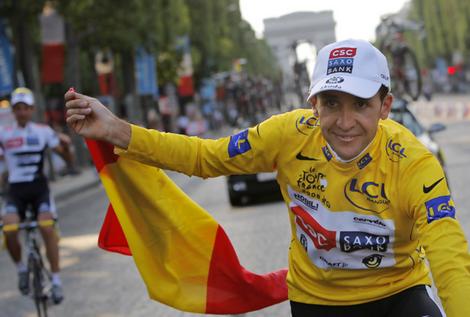 But just a few parting thoughts:
Add "Be in Paris for the finish of The Tour" (or, for that matter, at any stage) to the life list.
The final day's "parade" in to Paris -- only in France!
Add "be a helicopter pilot filming The Tour" to the jobs-I'd-like-but-will-never-have list.
Drinking Champagne in the team cars during the final ride in to Paris -- only in France!
France, in general: where's my ticket?
France, in specific: give me a house in any of those ancient river villages, perhaps one near the Rhone valley, an internet collection, and an ample supply of locally produced red wine.
To the commentators at the Versus network: I feel for you having to advertise next week's programming -- back to cage matches and no-rules fighting championships.
Ah well. C'est la vie.
And to everyone, congratulations!
 But just a few parting thoughts:
Add "Be in Paris for the finish of The Tour" (or, for that matter, at any stage) to the life list.
The final day's "parade" in to Paris -- only in France!
Add "be a helicopter pilot filming The Tour" to the jobs-I'd-like-but-will-never-have list.
Drinking Champagne in the team cars during the final ride in to Paris -- only in France!
France, in general: where's my ticket?
France, in specific: give me a house in any of those ancient river villages, perhaps one near the Rhone valley, an internet collection, and an ample supply of locally produced red wine.
To the commentators at the Versus network: I feel for you having to advertise next week's programming -- back to cage matches and no-rules fighting championships.
Ah well. C'est la vie.
And to everyone, congratulations!
Wednesday, July 16, 2008
Wind Tunnel
Erica suggested this blog.
I was talking to her on the phone and said, "Oh, I emailed you a photo of Cervelo's wind tunnel together with my thoughts about it." Her response was "You know about wind tunnels too?"
It turns out that when you study aeronautics, you can't help but learn about wind tunnels. The physics of what actually goes on when an airplane flies are pretty much the same physics going on inside a wind tunnel. And in some ways it is a lot easier to look at the fixed and symmetric venturi of a wind tunnel than the comparatively complex environment of an airplane flying through the annoyingly free sprited atmosphere. But for all that, wind tunnels remain interesting and quite complex creations -- at least once the desired level of precision and control reaches beyond that of rough approximations and undergraduate aeronautics classes.
So what does make a wind tunnel so interesting? It is the very task of simulating, in a very controlled and in many ways deeply unrealistic environment, a very complex situation. Let's start with this: intuitively, using only stuff sitting around at home, how would you build a wind tunnel. Probably like this, the way I used to as a child (really):
Hold your test subject (Mk.1 Paper Aviation Device) so that a fan blows air over it. Measure the lift and drag forces on Mk.1 PAD and plot on graph paper. A nice start, but with one grave error: your position relative to the fan.
It turns out that the air coming off of a fan (or as we call them in wind tunnels, a compressor) is quite turbulent and prone to taking on a swirling action imparted by the spinning blades. Far more effective, then, is to put your model upstream of the blades so that the air is pulled across it rather than pushed. Now since we'd like to have some more control over that environment, encase the model in a box with a few holes for observation and balance beams to take measurements with. This area now gets the fancy name of test section.
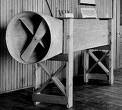 Congratulations, you are now at the Orville and Wilbur Wright level of wind tunnel sophistication.
This is pretty good for rough approximations and low speeds. A good first improvement is to put a screen of some kind at the inlet side and between the test section and the compressor. These further help smooth the airflow. Make sure that your test object (wing section, large building, cyclist) doesn't get too close to the walls of the test section so you don't get interference between the flow along the walls (which is disturbed and turbulent) and the flow over the model (which must mimic the smooth flow of air in free space). An interesting exception to this problem occurs when testing objects (cars, bicycles) that operate close to the ground. Here you want to simulate the effect of the ground, but it turns out that since, for a moving vehicle, the ground and the airmass and the vehicle all have different relative velocities. As a result, some of the amazing wind tunnels in use by Formula 1 teams actually have "rolling floors" -- giant belts that roll along under the model to simulate the aerodynamic issues caused by the ground more accurately.
Anyway, back to our model. So far, so good. We're doing quite nicely as long as we're comfortable with atmospheric temperatures and pressures and don't try to go too fast. Since airplanes cruise at all kinds of confusingly complex altitudes (where it can also get really, really cold) it would be nice to somehow simulate those conditions. It also turns out that taking a bunch of air, sucking it with giant fans (er, I mean compressors) and dumping it back out can anger the neighbors who live downstream of you and who may not like sudden man-made windstorms and all the resulting noise. It can also be quite a bit more efficient to loop the air back around, so that the exhaust of the compressors flows around in a big loop and actually feeds back into the front of the test section.
I know, we don't want to blow on our model, but suck on it. Thank you, Lewis Black. But we aren't really blowing -- the suction side of the compressor is much closer to the test section than the blowing side. And we have a huge loop full of guide veins and settling chambers (fat areas in our recirculating tube that serve to damp out turbulence) and screens and whatnot.
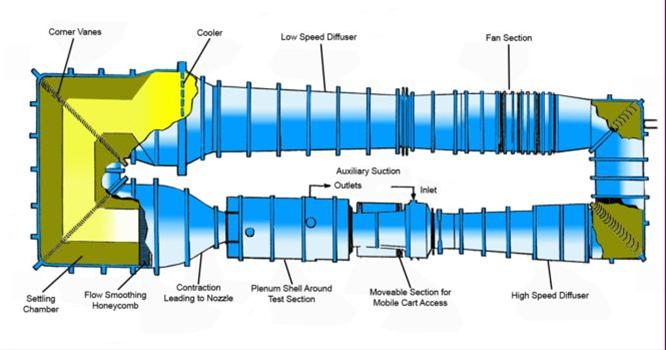 And since we now have a closed system, we can feel free to chill or pressurize the test section to our heart's content. Pressurize? Wouldn't you want to do the opposite, to test an airplane that is flying at the thin air of high altitude? Yeah, you would, if it wasn't for the irritating fact of the Reynold's number that always intrudes right about now. The Rn is about the most confusing concept in aeronautics, so I'm going to try to keep it simple. Have you ever heard the story about how someone (usually NASA or the Air Force or some other Big Agency that is fun to embarrass) tried to test a fruit fly (or honey bee, or dragon fly, or some other small insect) in a wind tunnel and proved beyond a doubt that it couldn't fly? Its total B.S. If you stick a scaled up model of a honey bee in a wind tunnel and try to simulate it flying it will, in fact, totally fail to fly. But the reason for this is well understood. It is the Reynolds number. And for the same reason, if you put a scaled up model of a 787 in a plain-Jane wind tunnel you'll get aero data back that is only a teensy weensy bit more accurate than you did for the unflyable bumble bee.
The problem is one of scale. Pretend you are a molecule of Oxygen or Nitrogen or some other common atmospheric constituent. You're a piece of air, don't sweat the details. You're sitting there, floating along happily, when along comes a wing, swooshing by and yanking you out of your happy daze as it extracts some of that magic property of lift. If that wing belongs to a bumble bee, it seems to flash by, larger than you, but not so enormously huge as all that. On the other hand, if you are up there in the tropopause and a 787 comes flying buy (in addition to you apparently being a few months in the future) its wing is moving much faster but is comparatively enormous. It flashes by for an eternity, like watching a city sweep by, thousands of times longer than the bumble bee wing.
And there you have it. Though the actual mechanics have more to do with the relationship between viscous and inertial forces, the basic "deal" of the reynolds number is that of scale. Compared to the bits of air through which they pass, a bumble bee wing is tiny and a 787 wing is huge. The difference is profound, since at the scale of an insect wing, air is much more dramatically viscous than anything we can imagine.
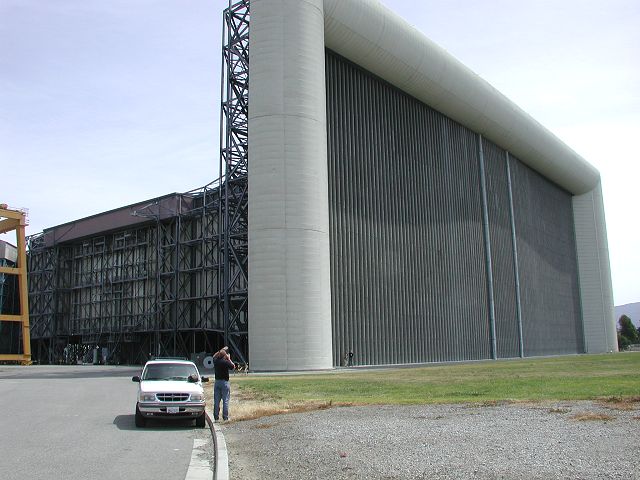 I take that back. We can imagine. Air, at a bumble bee's scale, is much closer to water than we might think. So all kinds of crazy viscous effects take place. But what does this mean for our wind tunnel? Even assuming we don't want to test bumble bees, it has grave consequences. It is unrealistic to test full size airplanes at anything close to flight speed. The largest wind tunnel in the world was located at NASA's Ames Research Center. It was a landmark. We used to say things like "two exits past the wind tunnel." It had a test section that was 80 feet high and 120 feet wide, and so could test small airplanes in full size or larger airplanes at a reasonable scale. But it was only good for a hundred miles an hour or so.
Testing airplanes at 600 mph requires a lot more energy -- an impossible amount of energy for a wind tunnel large enough to test a commercial jet. So scale model testing is necessary. And we now have the opposite problem of our "unflyable" bumble bee. Scale the airplane to 1/50th of its size and suddenly the air is way to sparse. The solution is to increase the density of the molecules of air -- pack them closer together so that they scale to match the environment expected at cruise speed and cruise altitude.
The two approaches to this are pressurization and refrigeration. The former is obvious -- it just plane squishes more and more and more molecules of air into the space around the model. But that only goes so far before engineering gets in the way and our wind tunnel wants to explode. The other approach is to chill the working fluid. All substances (save for some aberrant behavior right around phase changes) increase in density as they are chilled. By using both conditions, modern wind tunnels can produce conditions very close to (and sometimes identical to) that experienced by an aircraft in flight.
Ironically, the process of accelerating the air requires tens of thousands of horsepower -- and dumps a lot of waste heat into the wind tunnel. So cooling the tunnel and its contents is an uphill struggle. You can imagine how much electricity it takes to spin 12,000hp motors, remove the waste heat they produce, and chill the air to 100 degrees below zero...
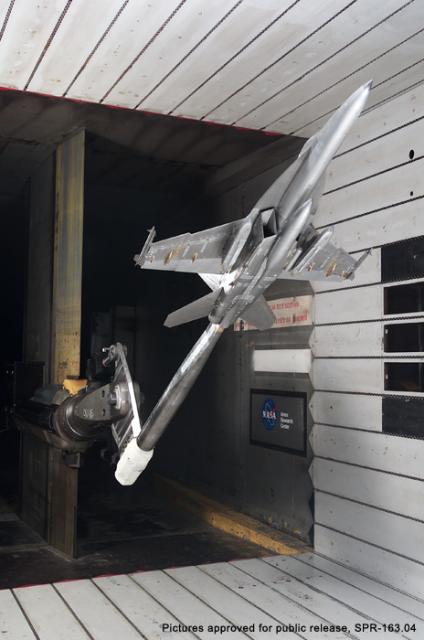 All kinds of other crazy things get involved. Test sections with slotted or perforated walls backed by giant suction pumps to clear away turbulent flow or dissipate shockwaves streaming off the model. Flexible tunnel sections (supported by immense hydraulic jacks) that change shape to optimize test conditions for different speeds and conditions. Pure nitrogen test atmospheres for greater predictability and easier cooling (just spray liquid nitrogen into the tunnel and bleed off the excess pressure).
As a result, wind tunnels today are used primarily as validation tools. Models are tested simultaneously in a tunnel and using CFD (computational fluid dynamics) code. Engineers use the results of these selected comparison runs to tweak their code until the results agree perfectly. The design is then roughed out using the CFD simulations (which require prodigious computing power -- but that's cheap these days) to produce a few candidates. These candidates are run through the wind tunnel and the results of the tunnel runs and CFD simulations are analyzed together to select a final approach. Usually the CFD simulations will look at all kinds of variations and the wind tunnel only at a few crucial cases.
This cycle of CFD approximation leading to wind tunnel verification proceeds until the design is finished. As CFD has improved, the time spent in the tunnel should have decreased, but the increasing drive for optimization means that engineers still find it worth their while to run tests in the tunnel. CFD codes were once crude and are improving, but with billions of dollars on the line, a little due diligence is still the way to go.
For dramatically unpredictable environments -- like a cyclist with jersey billowing, cross wind blowing, wheels spinning, peloton careening -- CFD is actually just about impossible. Even if gifted with the supercomputing power of Boeing's Crays, an aero obsessed cycle company like Cervelo couldn't accurately test in a purely virtual environment. Instead they use computers to design naked components such as frame cross sections, but rely on the wind tunnel for the synthesis of the parts into the whole. Since the test situations are easily atmospheric, the tunnel needn't be complex, either, and the whole situation is a lot more fun when you've got some dude in a Team CSC jersey pedaling away in your test section.
![B4BF1790[2].jpg](//lh4.ggpht.com/strauss.nick/SH6qmB1BajI/AAAAAAAAAIg/rUT0apXpcLw/B4BF1790%5B2%5D.jpg?imgmax=800)
Note, by the way, the turntable for testing in crosswinds. Also note that moving floor technology hasn't quite made it to cycling yet. Without the ground hugging aerodynamic downforce of Formula 1 cars, there may not be a need. And, without the $150 million a year budgets, there may not be the cash!
I was talking to her on the phone and said, "Oh, I emailed you a photo of Cervelo's wind tunnel together with my thoughts about it." Her response was "You know about wind tunnels too?"
It turns out that when you study aeronautics, you can't help but learn about wind tunnels. The physics of what actually goes on when an airplane flies are pretty much the same physics going on inside a wind tunnel. And in some ways it is a lot easier to look at the fixed and symmetric venturi of a wind tunnel than the comparatively complex environment of an airplane flying through the annoyingly free sprited atmosphere. But for all that, wind tunnels remain interesting and quite complex creations -- at least once the desired level of precision and control reaches beyond that of rough approximations and undergraduate aeronautics classes.
So what does make a wind tunnel so interesting? It is the very task of simulating, in a very controlled and in many ways deeply unrealistic environment, a very complex situation. Let's start with this: intuitively, using only stuff sitting around at home, how would you build a wind tunnel. Probably like this, the way I used to as a child (really):
Hold your test subject (Mk.1 Paper Aviation Device) so that a fan blows air over it. Measure the lift and drag forces on Mk.1 PAD and plot on graph paper. A nice start, but with one grave error: your position relative to the fan.
It turns out that the air coming off of a fan (or as we call them in wind tunnels, a compressor) is quite turbulent and prone to taking on a swirling action imparted by the spinning blades. Far more effective, then, is to put your model upstream of the blades so that the air is pulled across it rather than pushed. Now since we'd like to have some more control over that environment, encase the model in a box with a few holes for observation and balance beams to take measurements with. This area now gets the fancy name of test section.
 Congratulations, you are now at the Orville and Wilbur Wright level of wind tunnel sophistication.
This is pretty good for rough approximations and low speeds. A good first improvement is to put a screen of some kind at the inlet side and between the test section and the compressor. These further help smooth the airflow. Make sure that your test object (wing section, large building, cyclist) doesn't get too close to the walls of the test section so you don't get interference between the flow along the walls (which is disturbed and turbulent) and the flow over the model (which must mimic the smooth flow of air in free space). An interesting exception to this problem occurs when testing objects (cars, bicycles) that operate close to the ground. Here you want to simulate the effect of the ground, but it turns out that since, for a moving vehicle, the ground and the airmass and the vehicle all have different relative velocities. As a result, some of the amazing wind tunnels in use by Formula 1 teams actually have "rolling floors" -- giant belts that roll along under the model to simulate the aerodynamic issues caused by the ground more accurately.
Anyway, back to our model. So far, so good. We're doing quite nicely as long as we're comfortable with atmospheric temperatures and pressures and don't try to go too fast. Since airplanes cruise at all kinds of confusingly complex altitudes (where it can also get really, really cold) it would be nice to somehow simulate those conditions. It also turns out that taking a bunch of air, sucking it with giant fans (er, I mean compressors) and dumping it back out can anger the neighbors who live downstream of you and who may not like sudden man-made windstorms and all the resulting noise. It can also be quite a bit more efficient to loop the air back around, so that the exhaust of the compressors flows around in a big loop and actually feeds back into the front of the test section.
I know, we don't want to blow on our model, but suck on it. Thank you, Lewis Black. But we aren't really blowing -- the suction side of the compressor is much closer to the test section than the blowing side. And we have a huge loop full of guide veins and settling chambers (fat areas in our recirculating tube that serve to damp out turbulence) and screens and whatnot.
 And since we now have a closed system, we can feel free to chill or pressurize the test section to our heart's content. Pressurize? Wouldn't you want to do the opposite, to test an airplane that is flying at the thin air of high altitude? Yeah, you would, if it wasn't for the irritating fact of the Reynold's number that always intrudes right about now. The Rn is about the most confusing concept in aeronautics, so I'm going to try to keep it simple. Have you ever heard the story about how someone (usually NASA or the Air Force or some other Big Agency that is fun to embarrass) tried to test a fruit fly (or honey bee, or dragon fly, or some other small insect) in a wind tunnel and proved beyond a doubt that it couldn't fly? Its total B.S. If you stick a scaled up model of a honey bee in a wind tunnel and try to simulate it flying it will, in fact, totally fail to fly. But the reason for this is well understood. It is the Reynolds number. And for the same reason, if you put a scaled up model of a 787 in a plain-Jane wind tunnel you'll get aero data back that is only a teensy weensy bit more accurate than you did for the unflyable bumble bee.
The problem is one of scale. Pretend you are a molecule of Oxygen or Nitrogen or some other common atmospheric constituent. You're a piece of air, don't sweat the details. You're sitting there, floating along happily, when along comes a wing, swooshing by and yanking you out of your happy daze as it extracts some of that magic property of lift. If that wing belongs to a bumble bee, it seems to flash by, larger than you, but not so enormously huge as all that. On the other hand, if you are up there in the tropopause and a 787 comes flying buy (in addition to you apparently being a few months in the future) its wing is moving much faster but is comparatively enormous. It flashes by for an eternity, like watching a city sweep by, thousands of times longer than the bumble bee wing.
And there you have it. Though the actual mechanics have more to do with the relationship between viscous and inertial forces, the basic "deal" of the reynolds number is that of scale. Compared to the bits of air through which they pass, a bumble bee wing is tiny and a 787 wing is huge. The difference is profound, since at the scale of an insect wing, air is much more dramatically viscous than anything we can imagine.
 I take that back. We can imagine. Air, at a bumble bee's scale, is much closer to water than we might think. So all kinds of crazy viscous effects take place. But what does this mean for our wind tunnel? Even assuming we don't want to test bumble bees, it has grave consequences. It is unrealistic to test full size airplanes at anything close to flight speed. The largest wind tunnel in the world was located at NASA's Ames Research Center. It was a landmark. We used to say things like "two exits past the wind tunnel." It had a test section that was 80 feet high and 120 feet wide, and so could test small airplanes in full size or larger airplanes at a reasonable scale. But it was only good for a hundred miles an hour or so.
Testing airplanes at 600 mph requires a lot more energy -- an impossible amount of energy for a wind tunnel large enough to test a commercial jet. So scale model testing is necessary. And we now have the opposite problem of our "unflyable" bumble bee. Scale the airplane to 1/50th of its size and suddenly the air is way to sparse. The solution is to increase the density of the molecules of air -- pack them closer together so that they scale to match the environment expected at cruise speed and cruise altitude.
The two approaches to this are pressurization and refrigeration. The former is obvious -- it just plane squishes more and more and more molecules of air into the space around the model. But that only goes so far before engineering gets in the way and our wind tunnel wants to explode. The other approach is to chill the working fluid. All substances (save for some aberrant behavior right around phase changes) increase in density as they are chilled. By using both conditions, modern wind tunnels can produce conditions very close to (and sometimes identical to) that experienced by an aircraft in flight.
Ironically, the process of accelerating the air requires tens of thousands of horsepower -- and dumps a lot of waste heat into the wind tunnel. So cooling the tunnel and its contents is an uphill struggle. You can imagine how much electricity it takes to spin 12,000hp motors, remove the waste heat they produce, and chill the air to 100 degrees below zero...
 All kinds of other crazy things get involved. Test sections with slotted or perforated walls backed by giant suction pumps to clear away turbulent flow or dissipate shockwaves streaming off the model. Flexible tunnel sections (supported by immense hydraulic jacks) that change shape to optimize test conditions for different speeds and conditions. Pure nitrogen test atmospheres for greater predictability and easier cooling (just spray liquid nitrogen into the tunnel and bleed off the excess pressure).
As a result, wind tunnels today are used primarily as validation tools. Models are tested simultaneously in a tunnel and using CFD (computational fluid dynamics) code. Engineers use the results of these selected comparison runs to tweak their code until the results agree perfectly. The design is then roughed out using the CFD simulations (which require prodigious computing power -- but that's cheap these days) to produce a few candidates. These candidates are run through the wind tunnel and the results of the tunnel runs and CFD simulations are analyzed together to select a final approach. Usually the CFD simulations will look at all kinds of variations and the wind tunnel only at a few crucial cases.
This cycle of CFD approximation leading to wind tunnel verification proceeds until the design is finished. As CFD has improved, the time spent in the tunnel should have decreased, but the increasing drive for optimization means that engineers still find it worth their while to run tests in the tunnel. CFD codes were once crude and are improving, but with billions of dollars on the line, a little due diligence is still the way to go.
For dramatically unpredictable environments -- like a cyclist with jersey billowing, cross wind blowing, wheels spinning, peloton careening -- CFD is actually just about impossible. Even if gifted with the supercomputing power of Boeing's Crays, an aero obsessed cycle company like Cervelo couldn't accurately test in a purely virtual environment. Instead they use computers to design naked components such as frame cross sections, but rely on the wind tunnel for the synthesis of the parts into the whole. Since the test situations are easily atmospheric, the tunnel needn't be complex, either, and the whole situation is a lot more fun when you've got some dude in a Team CSC jersey pedaling away in your test section.
![B4BF1790[2].jpg](http://lh4.ggpht.com/strauss.nick/SH6qmB1BajI/AAAAAAAAAIg/rUT0apXpcLw/B4BF1790%5B2%5D.jpg?imgmax=800)
Note, by the way, the turntable for testing in crosswinds. Also note that moving floor technology hasn't quite made it to cycling yet. Without the ground hugging aerodynamic downforce of Formula 1 cars, there may not be a need. And, without the $150 million a year budgets, there may not be the cash!
Saturday, July 12, 2008
These things are beautiful...
Beauty, what is it?
To my artists and engineers brain, what constitutes beauty?
Because I know that I have a sense of when I am looking at something -- something engineered -- that is beautiful just as I know I have a sense of when I am looking at something devoid of beauty or even possessed of ugliness.
(1) It must set out to do certain things and do them well. I naive response would be to argue that this selects unfairly for specialists -- but not necessarily. A tool of the everyman can also say "I do these things -- and I do them well." Read on.
(2) It must be innovative in approach, perhaps even breaking new ground, though wonton novelty often produces ugliness as a frustrating side effect of incompletely understood principles.
(3) It must be clever, using not just raw force or expense or an obvious reliance on novelty to over come challenges. Ingenuity and problem solving must play a role. This mandates neither an easy nor a challenging gestation, for cleverness can be pre-planned or borne of the exegeses of desperation. Note that this is very different from (2).
(4) It must physically have clean lines on the inside and on the outside. An airplane's lines must flow smoothly and cleanly, but its interior systems if graphed out into hydraulics and electrics and pneumatics and avionics must also appear clean and flowing and well integrated. It must have the right number of parts, as a symphony must have the right number of notes, neither too few nor (worse yet) too many.
(5) It must be true. This is not a place for prototypes and vaporware. Any truly beautiful creation must have seen the touch of craftsmen and the light of day and the use for which it was intended. It need not have been produced in vast numbers, but it must have appeared in numbers sufficient to make an impact.
(6) It must be noteworthy or even extraordinary. The synthesis of these ideas must have, in some way, brought about success and significance. The first, the best, the most, a record will do but is not necessary. Living on beyond expected obsolescence, serving as a archetype for subsequent efforts,
These things are beautiful (and in no significant order):
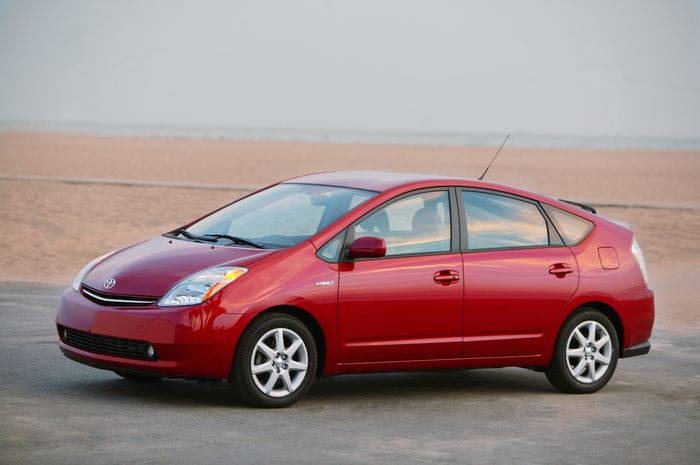 The Toyota Prius. Well engineered and brilliantly timed (better than the designers could ever have imagined, I suspect), the Prius appears destined to be the Honda Civic of the new millennium (and I mean the old CVCC Civic of the late 70's, not that newfangled thing that's bigger than I remember an Accord being...).
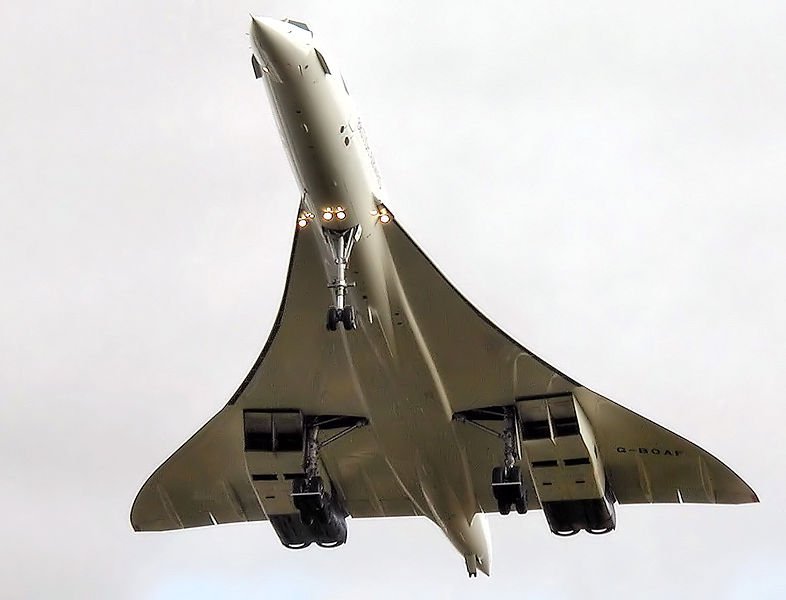 The Concorde. 'Nuff said.
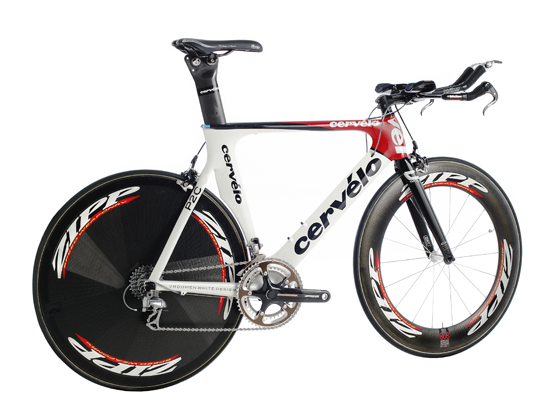 The Cervelo P2C...I should like the far racier P3C better -- but it is just a little too funny looking for me. Yeah, its faster, more aggressively aero...but the lines, like a modern Formula One car, are just a little too elaborate.
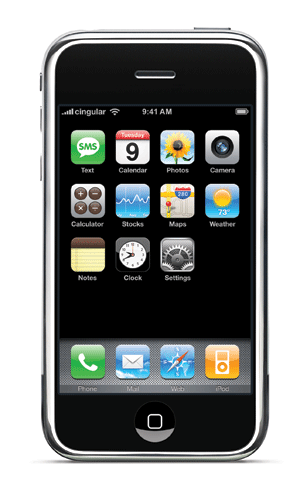 You knew this would be here, didn't you?
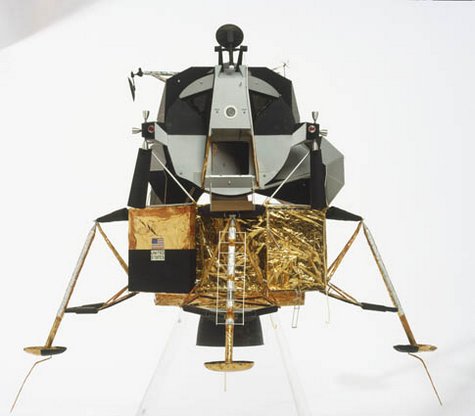 The F@#$'n Lunar Module? Widely agreed to be the Ugliest Spacecraft Ever? Yeah, but light, lean, very purposeful, and ultimately capable of way more than anyone ever expected. Go see Apollo 13.
Expect this blog entry to grow -- or find itself with sequels. There are many beautiful products of engineering out there. And they will get their day, don't worry. For tonight, I leave you with just a few.
To my artists and engineers brain, what constitutes beauty?
Because I know that I have a sense of when I am looking at something -- something engineered -- that is beautiful just as I know I have a sense of when I am looking at something devoid of beauty or even possessed of ugliness.
(1) It must set out to do certain things and do them well. I naive response would be to argue that this selects unfairly for specialists -- but not necessarily. A tool of the everyman can also say "I do these things -- and I do them well." Read on.
(2) It must be innovative in approach, perhaps even breaking new ground, though wonton novelty often produces ugliness as a frustrating side effect of incompletely understood principles.
(3) It must be clever, using not just raw force or expense or an obvious reliance on novelty to over come challenges. Ingenuity and problem solving must play a role. This mandates neither an easy nor a challenging gestation, for cleverness can be pre-planned or borne of the exegeses of desperation. Note that this is very different from (2).
(4) It must physically have clean lines on the inside and on the outside. An airplane's lines must flow smoothly and cleanly, but its interior systems if graphed out into hydraulics and electrics and pneumatics and avionics must also appear clean and flowing and well integrated. It must have the right number of parts, as a symphony must have the right number of notes, neither too few nor (worse yet) too many.
(5) It must be true. This is not a place for prototypes and vaporware. Any truly beautiful creation must have seen the touch of craftsmen and the light of day and the use for which it was intended. It need not have been produced in vast numbers, but it must have appeared in numbers sufficient to make an impact.
(6) It must be noteworthy or even extraordinary. The synthesis of these ideas must have, in some way, brought about success and significance. The first, the best, the most, a record will do but is not necessary. Living on beyond expected obsolescence, serving as a archetype for subsequent efforts,
These things are beautiful (and in no significant order):
 The Toyota Prius. Well engineered and brilliantly timed (better than the designers could ever have imagined, I suspect), the Prius appears destined to be the Honda Civic of the new millennium (and I mean the old CVCC Civic of the late 70's, not that newfangled thing that's bigger than I remember an Accord being...).
 The Concorde. 'Nuff said.
 The Cervelo P2C...I should like the far racier P3C better -- but it is just a little too funny looking for me. Yeah, its faster, more aggressively aero...but the lines, like a modern Formula One car, are just a little too elaborate.
 You knew this would be here, didn't you?
  The F@#$'n Lunar Module? Widely agreed to be the Ugliest Spacecraft Ever? Yeah, but light, lean, very purposeful, and ultimately capable of way more than anyone ever expected. Go see Apollo 13.
Expect this blog entry to grow -- or find itself with sequels. There are many beautiful products of engineering out there. And they will get their day, don't worry. For tonight, I leave you with just a few.
Saturday, June 28, 2008
More Cowbell!
 Or: Erica's First Triathlon
For starters, I still struggle to say tri-ATH-lon and not tri-ath-A-lon.
But this morning, after a 4:15am alarm and only two cups of coffee (!), I was there to play my small supporting role as my lovely wife embarked on her first triathlon. I was there as bike technician (which never extended beyond ensuring proper tire inflation - a good thing since my bike technician skills extend only a hair's breadth beyond this basic task), wetsuit tugger (they never showed that part in the old Jacues Cousteau specials on PBS), photographer, and 50% of her cheering section.
I'll skip the race details. For that, read Erica's blog. She was the one doing it, after all. I just got to watch.
But I'll tell you one thing: it was fun. Way more fun than I expected. Something was always going on - someone was hitting their T1 or T2 or else crossing the finishing line. And everyone was there to support and cheer. Triathlon, except for the very most elite levels, is a sport of the PB's: Personal Bests.
Well, as an aside, this is my first triathlon as technician/tugger/photographer/fan so I have no idea how things will get at higher profile or co-ed events. Something tells me that the guys will manage to make it a whole lot more, well, manly and competitive.
But, back to the happy joy of Five Mile Lake. Here it seemed that everyone knew that supporting another participant wasn't going to hurt their own performance. Triathlon isn't zero-sum. You don't do better by out-gaming your opponent, trash talking their equipment ("Titanium, huh? You don't think that's kind of 90's do you?"), talking up your game ("So Lance and I were having some beers the other day..."), or any of the first-tee crap that seems to infest some other sports. The net result was 300-some happy women all out to push their bodies and their hearts as far as they could. Women with the easy physicality of those still in high-school. Women who were in their 70's. Women wearing oversized wetsuits and women with bodyfat levels hovering just above (or perhaps below) the danger line. Women riding $6,000 Cervelo's and women riding comfort cruisers with platform pedals and sprung seats.
Just about the only drawback was a tedious DJ spinning an endless series of what I presume he thought were women-friendly triathlon songs. You know, up-tempo big band stuff with a bit of 70's diva thrown in for fun. Uh-huh. Erica works out to Pink, Black Eyed Peas, and the like. I prefer Guns'n'Roses, AC/DC, and that whole 1980's metal scene. But at no point have either of us ever thought "Hey, let's put on the Charlie's Angels theme for that final push to the finish line!" He overlaid this with an almost patronizingly hyper-empowering stream of patter that ranged from the repetitive ("You're all goddesses today!") to the frankly bizarre ("Nice purple there, number 829. Did you know purple is a very high vibrating color associated with the 7th Chakra?").
Eh? Perhaps its because my approach to workout motivation leans more to visualizing scenes from Band of Brothers than to thinking about the planar elevation of my inner being, but this just kept coming at me from some other place.
But put that aside, don't mind my carping, and just remember this: never forget the value of giving some of your time to help a love one chase down a dream of a goal.
Now like I said - if you want the grueling details, read Erica's blog. But I'll tell you this - she kicked ass. Well inside her target time, even inside the time I thought she'd post. And she came across the finish line glowing and delighted.
And I felt as proud of her as I ever have. So this one's for you, my love.
And the cowbell reference? Its a cycling thing. People lining the course at the great European races (by which I pretty much mean the Tour de France) ring cowbells as riders come by -- warning the next group of fans to be alert and showing support for the riders. There were a couple of cowbell ringers on the course today, even at this small event, and besides creating a nice Continental atmosphere, it had that whole "More Cowbell" sketch from Saturday Night stuck in my head.
Subscribe to:
Posts (Atom)