Pages

Showing posts with label meta. Show all posts

Wednesday, August 27, 2008

Barstools

This post is going to make me sound like an alcoholic if I'm not careful. But the thing to remember is that this is not a blog about drinking, or indeed about bars. Rather it is a blog about a particular arrangement of people, furniture, and objects.

That said, drinking will figure in to it, but feel free to make that coffee, water, or a smoothie if you prefer. Move it out of a drinking establishment and into a coffee house or
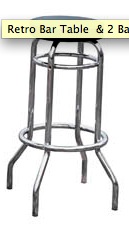
Picture 3.jpgWhat, in my roundabout way, I am trying to get to is this: I love sitting on a barstool, at a bar, watching the world go by (or participating in it -- barstool does not mandate or even imply passivity). The personal geography of the stool and the bartop are nearly perfect. A great height (if it is not too tall) for working on laptop. A great height for a book or magazine or some old fashioned pen-and-ink notepaper. There is enough space to spread out -- but not so much as to enable uncontrolled sprawling. A plate, a drink, and a book/laptop/magazine fit perfectly. This forces a tidy work habit and the selection of essential resources. The height of the surface also enables a pleasant multitasking -- the sharing of time between food and drink and whatever form of work (or recreation -- for a laptop computer or a book or some notepaper could imply either for me) is at hand.

Picture 5.jpgBut almost all of this could happen at a table. The relationship between the tabletop and the body is not too different from that between the bartop and the body. But it is a significant difference. The bartop encourages a leaning, relaxed, elbows-on-the-table mood. The table is a rigorous place, both by arrangement and psychology, where posture must be maintained, children should be seen but not heard, and knife and fork must be used properly.

There is something else about the bar that works well, and that is the back bar and the (almost) inevitable TV playing the news or a sports show. First, the back bar, that glorious collection of multicolored, multistyled bottles against a mirrored backdrop. Cognacs, Scotch whiskies, and super-premium vodkas and bourbons on the top row. Then the blended whiskies, the more commonplace vodkas and bourbons and a necessary range of tequila. Finally, one step above the well, the more ordinary vodkas and rums as well as the additives: the vermouths and the liquors.

I'll admit, right now, that your favorite bar may not exactly mirror that arrangement. This is just (roughly) how I'd do mine.

It is a wonderful visual stimulus -- something to gaze at when you need to look up. Unlike other diners across (or at an adjacent) table, it never looks back (if it ever does, seek help). Unlike an office wall, it is more than eighteen inches away and gives your eyes some sort of a break from the relentlessly myopic staring of the modern knowledge worker.

The TV plays the same role. A quick look away to Larry King or Wolf Blitzer or Keith Olbermann can refresh a stuck thought process or just provide a break from a monotonous task. The intermezzo of a highlight reel can provide a quick break between catching up on work email and diving into the framework of an intricately planned project.

Picture 4.jpgAnd here, for the first time, we will also encounter the alcohol. From ancient Sumer on, people have found that properly treated fermented grains can produce a relaxed state, inducing of creativity, conversation, risk taking, and even, in the right situations, considerable productivity. In the classic pattern of the "if you mean whisky" fallacy, it can also produce excessively abrupt emails, poor proofreading, a tendency for summary resignations, misuse of Britney Spears crotch shots in PowerPoint presentations, and worst of all corporate Karaoke. But a little self restraint, here, and the benefits out weigh the risk of accidentally showing board members a photograph of Brit's underwear.

Here is a place where you can sit and work and take a moment to rest and someone will bring you (almost) everything you need. What, then, of the noise and the other people there? For starters, I'm the kind of guy who has no problem grabbing a spot at the bar, pulling out his laptop, ordering a beer, and getting to work. If the rest of the patrons are all meeting up and actually watching the game or flirting, so what! If they think I'm an oddball, then that is their problem and not mine -- and if you are uncomfortable with this sort of attitude then you might actually find this whole working-at-a-bar thing isn't for you. But read on, we'll get on to this interpersonal contact stuff soon enough.

The crowd, though, becomes another optional distraction, something to take your interest away when you need (or choose) to let it do so. The rest of the time, it is white noise. Stare at an overly complex scene -- say one of those ultra-hard German crossword puzzles based around an oil painting of a cluttered used bookstore or else a day care center. Then let your eyes loose focus for a moment and suddenly the visual stimulus retreats to manageability. Crowd noise does the same thing. It helps focus by forcing you into yourself. And when you want to, look at the bored girl and the desperate guy hitting on her, or the bachelor party group, or the silent couple, or the would-be executives or... And if you catch enough of one of the conversations, and it should be sufficiently close by, say hi, drop in, offer some advice, tell them the easiest way to the freeway or what you thought of Mama Mia. It is (to gracefully paraphrase Fight Club) a single serving friendship. If you laugh and they laugh, great, everyone wins. If you laugh and they laugh -- at you -- then at least you brought a little joy to the world and you will never meet these people again.

But we do not always come to bars solitary, with laptop. Sometimes we come with another person or even a people. And then the whole barstool thing takes on a new role. It is splendidly isolating -- the crowd noise again. You can say anything, things you wouldn't say at a quiet restaurant, things about each other and what you'd like to do later, things about your friends, things about your co-workers, the economy, or the Large Hadron Collider. Which, by the way, will completely fail to destroy the Earth or even the universe when it switches on. The Large Hadron Collider, that is. But when the things to say run out or need refreshing, there is the full spectrum of human drama there, from the TV screens to the other patrons (tastefully watched in the back bar mirror if there is one). Take a break, look around.

The posture -- remember the posture? Perch in couples holding hands, turn your wonderfully swivelable barstools towards each other for intimacy, turn back to the bartop for food or to read the menu or new magazines or to stare at the liquor bottles. If you are there in a group, lean in, lean out, arrange yourself as needed to talk to the person next to you, or n+1 spaces away. Raise your voice if necessary, scrum together as four for a laughing and shouting shared comment. Its all good, it all goes.

When you're on a barstool.

Wednesday, August 13, 2008

The fading of the blogasm

I have to apologize to my erstwhile readers who, numbering about six I think, I greatly thank for their attention. What forces this apology is the comparative quiescence of The Noodlebook over the past couple of weeks. When I started writing this blog, I was going like crazy -- often putting up two posts per day, back-dating one of them, and trying to make it look like I did this regularly and reliably. It seemed obvious that this phase, the blogasm as I called it in my usual way of creating portmanteau words, would fade.

In fact it held on a lot longer than I expected. I kept encountering things in my life that inspired entries. I kept thinking of interesting things that I wanted to explain. I wanted to write and write and write. So why the drop-off in postings, then? Time, frankly. The exegesis of my job have kept me away from the train, my usual blogging spot, for most days on the past three weeks. The train/bus combo from Edmonds to Bellevue is a rather tightly planned commute -- and it imposes some constraints on my timing. So when things get really busy or I know I will have to start early or work late (such as for a scheduled training class I'm teaching or taking) I am forced to drive.

But, readers, I think that things will be lightening up a little bit. Oh, I'm still busy, but for a few weeks I'll have some flexibility back and the ability to work on this little outlet of my energies. So here is a look at some of what I have planned:

A follow up to my why-I-like-Obama blog

The promised second part of my cryptographic advice for schoolchildren

An explanatory bit on hull length and some musings on how it might impact Olympic swimming

A thought piece on the design of rotor-based cipher machines and their sources of security as compared to modern ciphers

A tribute to the H-34 Choctaw and forgotten but historic aircraft in general

An explanation of my "I'd give a nut for an HP-65" statement (something that for possibly obvious reasons brings Erica endless amusement) and a brief history of HP calculators

Some sketches (tongue in cheek, of course) of some corporate personality types that I've been meeting

Some thoughts on the exploration of space and an outline of my (current) "If I ran my own space program" plan


So have faith and keep checking. I'll be back -- and in fact I guess that by putting up this post, I am back... The blogasm hasn't faded -- it has just been on pause for a while, gathering strength...

Tuesday, August 5, 2008

Reload the war!

So today I spent a non-trivial part of my morning monitoring the repair of a majorly blowed up database. I was the guy who found the problem, was the ticket owner for the fix, and was was front-ending all the user notifications and updates. So there was a good "business reason" as we like to say around here for why I was paying so much attention.

Plus, with the thing hosed, I couldn't do the work that I was actually trying to do.

Interestingly, there was a press conference going on at roughly the same time for Mars Phoenix which, despite having apparently discovered rocket fuel instead of life, was still worth paying attention to.

But what this meant was that I was fervently clicking "reload" (or refresh or whatever you prefer to call it) in at least four browser tabs: Unmannedspaceflight.com for Phoenix updates, the Remedy trouble ticket for updates from the DBA's, my email to try to get updates for various personal life threads, and the actual tool that I was trying to use to see if it could hit the databases OK.

Of course, anytime I hit "reload" and nothing had been changed I was quietly furious. Disappointed. Hurt. Resentful of the extreme negligence of the DBA's to not troubleshoot faster, of the people at NASA to not speak faster, of my friends to not write back immediately. Its an artifact of the modern world -- life at the speed of "reload."

People complain that we like our news in soundbite sized segments well suited to the 5:00 news. But I think that it is changing (or has changed) from that. We now expect our news to occur on demand. I get irritated when something happens at 2am -- so I can't watch it live. I get irritated when I wake up and find out that things happened several hours ago and there was all this time that I could have been posessing that knowledge, doing something interesting with it or just plain knowing it, but because those pesky Europeans live back there in Europe I missed the (pick one) Tour de France/Formula One race/ESA press conference/airshow.

But I'm not just craving immediate access to the latest information. I want that information to happen when, well, I'm in the mood for it. Hm, I could use a bit of juicy celebrity gossip...but wait, inconceivable, there's nothing! Hm, I wonder if John McCain has referred to The Ottoman Empire or Austria-Hungary or perhaps chosen to discuss Premier Bush's trip to The Orient...nope, no political gaffes! Things MUST happen! The MUST happen NOW!

And we don't just expect things to happen quickly or to have instant access to them ourselves. We seem to actually expect them to happen when we click on "reload."

I remember watching the invasion of Iraq (the first, fast moving, exciting part) as sort of an exercise in the rate at which CNN.com could update itself. Oh, the Marines are at such-and-such location trying to bridge a river...Reload...why haven't they crossed it yet? I KNOW better. I UNDERSTAND that the world is not actually a giant DVD recorded for my pleasure. I am not Adam Sandler in Click with my own magic web browser able to tell one group of people to stop producing news, just hold on guys, Mars is interesting right now. And then to tell another website to get moving, you've got audiences that demand satisfaction!

The reason I'm so convinced of this systemic change in our culture is that I believe it extends well beyond just news websites. In general, we have an expectation that everyone should be on call all the time -- and that we ourselves must be on call. When the phone rings, we answer it. When the text message arrives, we read it.

I'm not just talking about hipster kids or techno-tools who for social or professional reasons feel that they do have a need to be in touch 24x7. It is a pervasive situation (note that I do not say "problem" -- I'm not trying to pass judgement, just to comment) now. I see it in my friends, my family, and myself. We multitask at work and in our private time, and I often wonder (and here is where I stop saying situation and start saying problem) if this spreads our awareness too thin.

How hard is it, now-a-days, to get true quality time?

Sunday, August 3, 2008

Getting up to watch the rocket

So Erica and I had C & J over for dinner tonight. The time was wonderful, we really haven't had the chance to just hang out with them without a care or a deadline (and with everyone relatively well rested and healthy) in a very, very long time.

Tonight was also the night of Elon Munsk's third attempt to get one of his potentially revolutionary Falcon 1 rockets into space. Unfortunately, it did not go as planned. But this is not (yet) to be a speculation into the causes for the failure of the Falcon launch (though, and this won't surprise you, I've got theories). It is about hanging out with people that let you feel totally comfortable just being yourself.

Within fifteen minutes of arriving, with two bottles of liquor, a dozen lemons and limes, and a few crucial culinary ingredients with them, they knew that for at least the first part of the party I was going to Be Distracted. Which is code for pinging my various space chat pages and probably watching the SpaceX webcast when things actually looked ready to go.

index.php.jpegAnd, right as you'd expect, just as dinner was served, they hit the classic T-minus-ten point over in Kwajelan. So I wandered outside with the MacBook and reported on the update -- that the thing had shut itself down on the pad. C & J were happy to let me fill them in on they brief history of SpaceX and why this was sort of a big deal -- why I felt that if any of the alt.space crew was going to do it, it was Elon. A little blend of damn-the-torpedos, a little bit of willingness to take it on the chin and admit the hubris of their first vision.
By the time we were done eating and clearing the dishes in from outside (a nice day -- we thought we'd capitalize on it and dine al-fresco) they were ready to go again. We all gathered and watched the liftoff on my laptop. Things looked good. We remarked on the view. I remarked on the little bump in the steering as they passed through Mach 1. J. asked what that meant, I explained briefly. Someone commented on the now-much-discussed-roll oscillations. I said that it was moving about a bit, not like an Atlas or Delta that is as stable as a brick. But it seemed constant.

Then when the feed went dead and the very startled commentators came back to announce the dreaded words of "an anomaly" and the credits rolled. We all figured out what must have happened. Erica very graciously agreed to put Bella to bed and we finished clearing the dishes, I made another round of (very strong and very good) Margaritas.

Juice from one freshly squeezed lime
1 ounce orange liquor
2 ounces good tequila

Place in a glass with ice and stir. Salt rim (or sugar rim) is optional.


images.jpegWe settled in to play the very fun German style game "Settlers of Catan" that we had recently purchased. Erica went on to win both rounds -- though Colin gave her a good run for her money on the first one and I did a passable job of chasing on the second and might have come closer if Colin hadn't made a trade with Erica that basically gave her the game. But it was 1:20 and we were all tired. What was great was hanging out until that late with my favorite people playing a great game and having a lot of really good laughs.
But what this post really is about is about choosing the people that you tend to spend these times with. I don't have a lot of friends. Despite my gregarious teacher personality I keep a small circle of people around that I actually enjoy spending my precious off time with. And last night I realized a characteristic of these people that, when I am around them, I feel completely comfortable just being myself. Which often means being eccentric and obsessed with slightly odd things. They even join you, sometimes, and share in the emotion of events outside their personal scopes of interest. They listen and they understand.

Years ago we were out for a walk around Edmonds with these same friends. We'd stopped for coffee (and snacks) at a little independent coffee house not too far from the train tracks. We heard the whistle of an approaching train and I said, sort of without thinking about it "the train!"

J. looked at me and said, very seriously, "Nick, would you like to go outside and watch the train?"

That was a defining moment in our friendship. It was OK for me to enjoy watching trains go by. It was OK for me to care about things that might seem slightly odd.

I don't have a lot of friends that I put in this category -- but then again I don't have a lot of friends. And it isn't like I suddenly meet someone new and suddenly am pulling out my laptop at inappropriate times to surf the web. There is a boundary between politeness and geekiness, after all. But once I get to know someone, comfort being myself is what I look for -- and that's what I'm glad I've found!

Wednesday, July 16, 2008

105 things about me

My wife did a 101 things post on her blog. It is one of the funniest things I've ever seen her do. So I'm inspired to do one of the same. In the highly unlikely situation that you are reading this but do not already know me, then you will learn something about me. If you already do know me, then perhaps you'll find something amusing.

1) I stay up late or wake up at exotic hours of the day to watch Space Shuttle launches.
2) I truly believe in the exploration of space.
3) I think we're doing it all wrong. Give me a half dozen billion dollars and I'll show you how its done.
4) In addition to wishing I had my own space program, I wish I had my own secret army and underground hideout.
5) In many ways, I haven't grown up since the 6th grade.
7) In three years, I'll turn 40 and plan to celebrate at Bandon Dunes.
8) Or Pebble Beach.
9) My wife is my best friend.
10) I don't have a lot of friends. I only keep the ones I really like.
11) I'll always make you a drink of you come by. That includes coffee, if its the morning.
12) I believe that if you take care of the people you care about, they will take care of you.
13) I believe that my wife has the finest looking *** in the whole world.
14) I believe that you manufacture your own luck. Or bad luck, if that's the case.
15) I perpetually think that I want to sit around and do nothing but always feel better when I go out and do something.
16) Few things make me happier than sitting in at a bar with a beer, my laptop, and a WiFi connection, while getting paid for it.
17) I still enjoy sitting in a bar with a beer, my laptop, and a WiFi connection even while not getting paid for it.
18) I believe that doing improv comedy for two years was the best professional training I ever received.
19) Knowledge comes where you can find it. Never stop learning and you will never grow old.
20) Some people have addiction issues. I do too -- to learning.
21) My blog has just been crawled by Google and that makes me feel like I just won a presidential primary.
22) I plan to vote for Obama as much because he makes me give a damn as because I actually agree with him.
23) I used to be a Republican.
24) I rarely talk politics because I find most people just re-state their opinions while getting louder and louder and don't actually want to learn anything.
25) I enjoy observing human behavior.
26) No behavior is more amazing to observe than that of your child.
27) I feel guilty that I only got around to mentioning my daughter on thing number 26.
28) The Cat in the Hat irritates me but Fox on Sox is pure genius.
29) My favorite five books are Neuromancer, The Name of the Rose, The Fabric of the Cosmos, The Codebreakers, and On Food and Eating.
30) I never said my interests were mainstream.
31) My first encounter with the World Wide Web was in 1991.
32) Yeah, it was being served by Tim Berners-Lee's Next Cube.
33) My reaction was "This won't go anywhere."
34) I usually can admit my mistakes.
35) I've written a science fiction novel but couldn't get a publisher interested.
36) I wrote it three years ago and it is no longer science fictiony enough.
37) My next novel is going to be fantasy.
38) Kids have so much more imagination than adults.
39) My daughter manages to make up words and stories and pictures that beat anything I ever could come up with. And she does this every day.
40) Her favorite planet is Saturn. Mine is also Saturn.
41) I also have a favorite element, a favorite compound, a favorite airplane, a favorite moon, and several favorite cipher algorithms, although any of these are subject to change at any time.
42) My wife and I met because of a book about code breaking. She read it for school. I read it for fun.
43) I truly believe that Google has changed the world.
44) My one professional hero is Richard Feynman.
45) I try to eat healthy but find it a struggle. My co-workers always bring in cookies, banana bread, and exotic Polish chocolates.
46) I rarely eat beef, as much because I find it easiest to adopt a few simple rules (no beef, no cheese, no processed sugar, no refined wheat, no French fries) to help me eat healthy.
47) My favorite fish is seabass, followed by salmon.
48) I am tempted to find out just how long I could go eating nothing but sushi. I suspect it is a long time but suspect that I will be disappointed.
49) I prefer email to phone calls.
50) I type at 90 words per minute when I hit full stride.
51) I can easily drink eight cups of coffee in a day.
52) Realizing that your consumption of coffee meets most of the DSM requirements to be classified as an "addiction" is a scary thing.
53) I bring my own coffee and French press to work.
54) If I won PowerBall (one of the big ones), I'd buy a Gulfstream G650 jet and rent a dozen apartments in different countries and sublet the ones I wasn't living in a week at a time to travelers but otherwise spend a lot of time in different places.
55) I have an elaborate fantasy life.
56) Despite what that might make you think, I am very, very happy with everything about my real life.
57) I really believe that I am as phenomenally lucky as a man can be.
58) I know my wife loves me but I am just insecure enough that I try to always act like I am wooing her.
59) I know my daughter loves me but I never try to count on that love.
60) I enjoy riding the train in the morning and at night because it gives me time to think.
61) Sometimes I think about space, sometimes about airplanes, sometimes about my family, occasionally about work.
62) I have a miserable drive but a pretty decent pitching and chipping game.
63) I have played one par and one birdie hole in my entire life.
64) Sometimes, I think about packing it all in and tending bar, but I know I'd disappoint a lot of people.
65) That said, I love tending bar.
66) My favorite cocktails are the Sidecar and Manhattan.
67) My favorite bourbon is Maker's Mark not least because their parent company owns Titleist.
68) I was trying to learn to cook and then I married a chef and now I'm intimidated to make anything other than oatmeal.
69) But I've cornered the market on beverages at our house.
70) Food, drink, and hospitality are very important to me.
71) I easily resent people who take advantage of my generosity but don't worry, if you've ever been invited back, then you're not taking advantage of my generosity.
72) Sometimes I cry when rovers land on mars.
73) Sometimes I cry when I hear about small businesses with naive but well intended ideas that I believe are doomed to failure.
74) Of all my emotions, the one I struggle with the most is frustration.
75) I do not like men who put down their families just to make themselves sound better.
76) I have the utmost respect for my family and believe that they make me a better man.
77) My wife is the sexiest woman alive.
78) Yes, I know that number 77 and number 13 are very close to duplicates. She deserves it.
79) I believe that knowledge and strength and humor are as important to attraction as raw looks.
80) Compatible taste in food, approaches to snuggling, and phone manners are important too.
81) I would take up arms to defend my family.
82) Sometimes I think "Aah, those were the days..." about obscure topics like mainframe computers, supersonic airplanes, and muzzle loading rifles.
83) I collect airplane flight manuals. At last count, I have several hundred.
84) I also collect design proposals for spacecraft, built and unbuilt.
85) If you have any, let me know.
86) I wish I had more time to balance the things I love to do and the things I need to do.
87) I require at about an hour of quiet downtime every day or I start to go a little funny.
88) I have found blogging to be the perfect activity to do when I have some quiet downtime.
89) I would be content if I had memorized every article in Wikipedia, but not for long.
90) I admire people who are masters of obscure specialties (like being the world's top expert on Niobium) but know that I could never be one of them.
91) Sometimes, I think I have Aspergers, but probably not.
92) I find it relaxing to memorize complex the arrangement of complex and interwoven systems like airplane flight controls, cryptographic algorithms, and battalion level military organizations.
93) I have a hard time remembering names.
94) I guarantee that I will think of things I want to add to this list and have a troubling existential crisis regarding the legitimacy of modifying a "things about me" list.
95) My Myers Brigs Type Indicator is INTP.
96) I really like psychological testing.
97) Most of the time, I'd rather be outside.
98) My favorite campgrounds are wooded, near water, and have a good firepit.
99) I like to travel light but find it hard to do so.
100) When I die, I hope that I will have helped people understand themselves and the world around them.
101) I strive not to be guided by regrets or fears but by the promise of what could be, but find it hard to do so.
102) I believe that knowing yourself honestly is the most useful kind of knowledge to put to use.
104) The best moments, after seven years of marriage, are the times when we are lost in conversation together just like on our first dates.
104) Sometimes alcohol is involved, but not always. And it definitely was on the first dates.
105) I will pretend not to care what other people will think when they read this list, but will honestly think about it a lot.

Saturday, July 12, 2008

These things are beautiful...

Beauty, what is it?

To my artists and engineers brain, what constitutes beauty?

Because I know that I have a sense of when I am looking at something -- something engineered -- that is beautiful just as I know I have a sense of when I am looking at something devoid of beauty or even possessed of ugliness.

(1) It must set out to do certain things and do them well. I naive response would be to argue that this selects unfairly for specialists -- but not necessarily. A tool of the everyman can also say "I do these things -- and I do them well." Read on.

(2) It must be innovative in approach, perhaps even breaking new ground, though wonton novelty often produces ugliness as a frustrating side effect of incompletely understood principles.

(3) It must be clever, using not just raw force or expense or an obvious reliance on novelty to over come challenges. Ingenuity and problem solving must play a role. This mandates neither an easy nor a challenging gestation, for cleverness can be pre-planned or borne of the exegeses of desperation. Note that this is very different from (2).

(4) It must physically have clean lines on the inside and on the outside. An airplane's lines must flow smoothly and cleanly, but its interior systems if graphed out into hydraulics and electrics and pneumatics and avionics must also appear clean and flowing and well integrated. It must have the right number of parts, as a symphony must have the right number of notes, neither too few nor (worse yet) too many.

(5) It must be true. This is not a place for prototypes and vaporware. Any truly beautiful creation must have seen the touch of craftsmen and the light of day and the use for which it was intended. It need not have been produced in vast numbers, but it must have appeared in numbers sufficient to make an impact.

(6) It must be noteworthy or even extraordinary. The synthesis of these ideas must have, in some way, brought about success and significance. The first, the best, the most, a record will do but is not necessary. Living on beyond expected obsolescence, serving as a archetype for subsequent efforts,

These things are beautiful (and in no significant order):

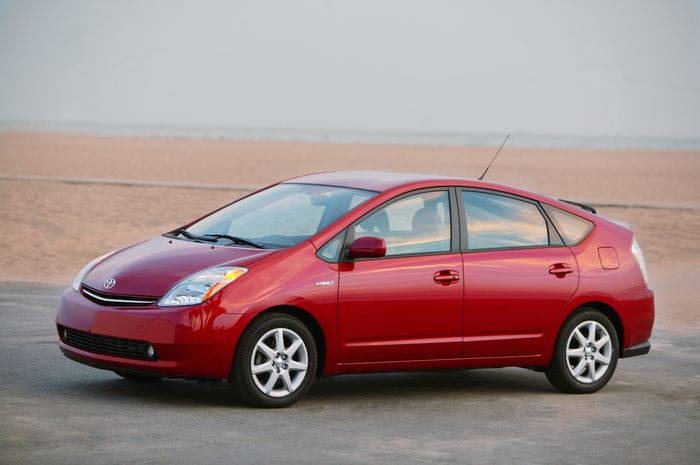
2007-toyota-prius-touring-edition-front-left.jpgThe Toyota Prius. Well engineered and brilliantly timed (better than the designers could ever have imagined, I suspect), the Prius appears destined to be the Honda Civic of the new millennium (and I mean the old CVCC Civic of the late 70's, not that newfangled thing that's bigger than I remember an Accord being...).
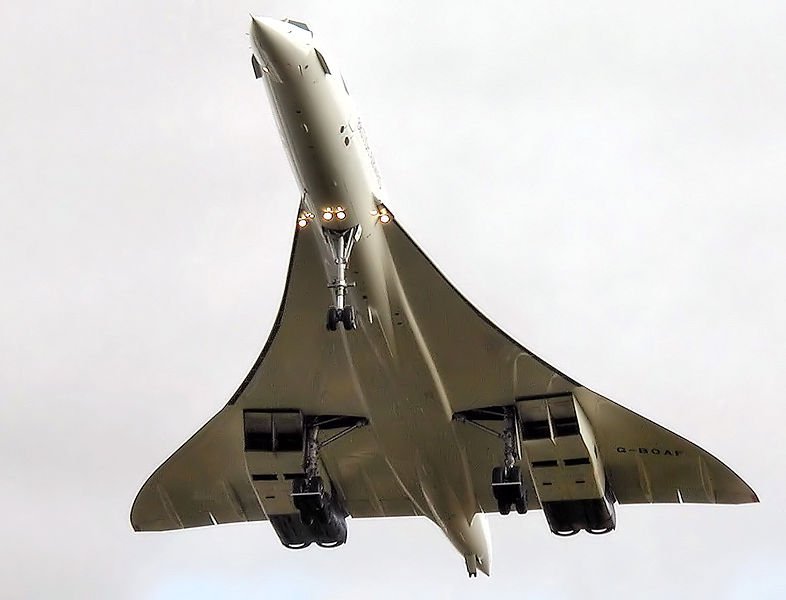

786px-Concorde.planview.arp.jpgThe Concorde. 'Nuff said.


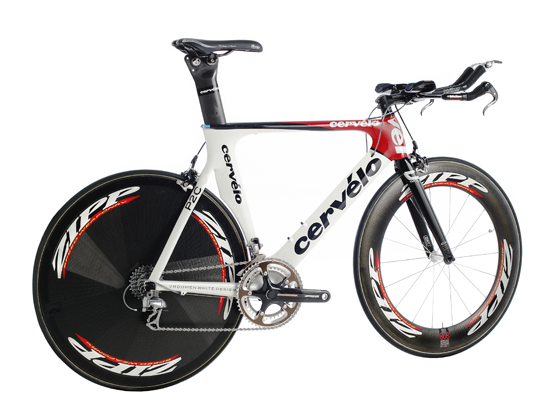
P2C-White.pngThe Cervelo P2C...I should like the far racier P3C better -- but it is just a little too funny looking for me. Yeah, its faster, more aggressively aero...but the lines, like a modern Formula One car, are just a little too elaborate.
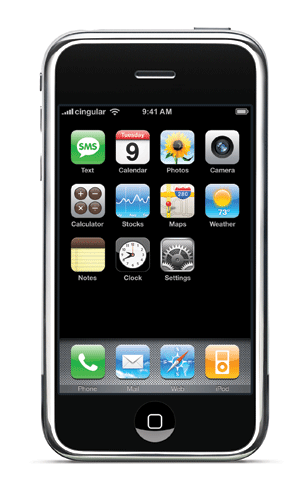


iphone_home.gifYou knew this would be here, didn't you?
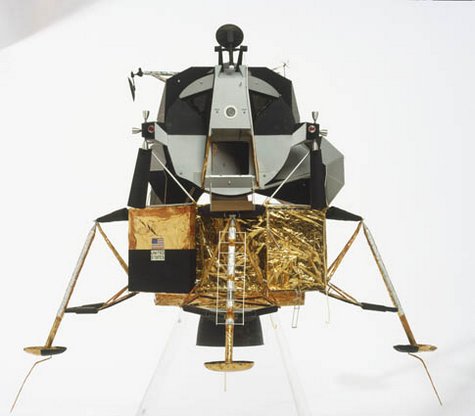


45045943.JPGThe F@#$'n Lunar Module? Widely agreed to be the Ugliest Spacecraft Ever? Yeah, but light, lean, very purposeful, and ultimately capable of way more than anyone ever expected. Go see Apollo 13.


Expect this blog entry to grow -- or find itself with sequels. There are many beautiful products of engineering out there. And they will get their day, don't worry. For tonight, I leave you with just a few.

Sunday, June 29, 2008

My favorite cipher


There is something gloriously manual about a hand cipher, a cipher using pencil, paper, and possibly a small collection of keytables or such. There is intimate connection with the message, and a comprehensible dynamic that is impossible for the oily "kerchunk" of a rotor machine or the silent algorithmic intensity of yet more modern techniques.

So, in my not-remotely-technical way, I propose a quick review of three interesting wartime hand ciphers. One from the First World War, two from the Second, all three German. I'll take a look at these three from the standpoint of a cipher clerk enciphering a message in the field and then, with a perspective as artistic as it is mathematical, at the inner workings that render reversible incomprehensibility. It'll take time, so bear with me. First one, then the rest later on. If I get into it, there might even be more than these three..

ADFGVX -- and the heroic efforts that lead to its breaking -- is at least conceptually familiar to students of 1918. In the final year of that static conflict, the French cryptographic victory helped the allies withstand the final German push to Paris (it should be noted that there are those who question this widely held view of the history).

The German designers of ADFGVX knew well that a successful cipher needed to be simple to use. This lesson, and the corollary that a complex cipher may, through laziness or simple haste, may prove self-compromising in the field, was one that would be lost between the wars, much to the relief of allied cryptanalysts who knew they could always count on sloppy German practice.

But ADFGVX itself embodied some very interesting ideas. For starters, it enciphered messages into six easily transmitted letters: A, D, F, G, V, and X. In Morse, these letters are simple to send and difficult to confuse on reception. Clear transmission (and therefore minimum repetition) improves security.

Let us suppose you have the message "It was the best of times" to encrypt. The first ingredient is a 6x6 substitution square (note that original versions of this used the letters ADFGX in a 5x5 grid and therefore could not directly encipher numbers). In the field, this would have been provided by headquarters and, probably, changed on a daily basis.

  A D F G V X
A Q 1 W E R 2
D 3 T Y U 4 I
F O P A 5 S 6
G D F 7 G 8 H
V J 9 K 0 L Z
X X C V B N M

(Note that I generated this square by typing on that irritating anachronism, the QWERTY keyboard. I don't pretend to cryptographic validity here.)

We look up each letter in the plain text in the grid and then write down the two ciphertext letters that define its coordinates (row first, column second, so "R" would be represented as AV).

Our message encrypts as:

I T W A S T H E B E S T O F T I M E S
DXDDAFFFFVDDGXAGXGAGFVDDFADDDXXXAGFV


Note that the length is now doubled -- but these are the six easiest letters to transmit (radio was effectively all Morse back then!).

We're not done, because this is just a simple monophonic substitution. That is, every letter in the plaintext corresponds to a single symbol in the ciphertext (even if that symbol consists of two letters). And a monophonic substitution is about as easy to solve as it gets.

Now we write our columns out according to a code word that we have been given. This might also change from day to day, or depending on recipient, in an effort to reduce the amount of traffic a given key setup would produce. Our code word is EDMONDS -- but we omit the second instance of any repeated letter for EDMONS. Write the intermediate encipherment out underneath this word, lining each letter up underneath the ones above it.

EDMONS
DXDDAF
FFFVDD
GXAGXG
AGFVDD
FADDDX
XXAGFV

I got lucky and my message lined up directly underneath the key word, making things look tidy and in fact more cryptographically secure.  The Germans left any blank columns unfilled but, as the tale will show, would have been better off adding random nulls at the end to fill all columns fully and equally.

Now take the letters off vertically by columns, in order of the alphabetical position of the letters in the key word. In this case, take of the D column first, then the E column, the M column, the N, the O, and finally the S. Per traditionally proper technique, we will do so in five letter groups.

XFXGA XDFGA FXDFA FDAAD XDDFD VGVDG FDGDX V

This message would then be transmitted.

Analytically, ADFGVX embodies degrees of both transposition (portions of the message are moved around -- think word scramble) and substitution (think, well, substitution). Interestingly, however, it relies on a third component for its security kicker: fractionation. This results from the step where each plaintext letter's two-part symbol is written down horizontally and then taken off vertically. Each plain text symbol is, therefor, divided (or fractionated) into two parts which are located in different portions of the ciphertext. Modern cryptography places quite a bit of emphasis on this idea -- confusion and diffusion being two sought after goals.

At first blush ADFGVX might seem extremely secure. But the reality is that there are cracks a cryptanalyst can pursue. Realize that after our first step -- the plaintext's initial transformation by substitution into the double-lenth intermediate message of digraphic symbols -- all we had was a simple monophonic substitution. Funny looking, yes, but ultimately almost entirely devoid of security. Given any message with a normal distribution of characters and statistics will quickly yield the digraph pairs that correspond to each plaintext letter. Our sample message is statistically skewed, but AG's representation of E would quickly stand out in any normal frequency count. From there, the rest follows and the message is wide open.

A cagy cryptanalyst can, then try to break back from the fractionation component of the second step. Trialing different lengths and sequences of the columnar transposition guided by the keyword in the cipher's second step is a brute force possibility. This would involve taking an intercepted message "backward" to the intermediate stage by various different keywords, then analyzing the resultant intermediate text for normal statistical distributions of digraph pairs.

Hold on, in case I lost you, think of it this way...and remember that once we reach the intermediate stage of the in-order double-lenght message, the break is effectively trivial.

Our wily cryptanalyst starts by assuming the message's keyword was four letters long. It really doesn't matter what those letters were because a four letter word can only yield 24 possible ways of taking off the columns to produce the final cipher:

1234, 1243, 1324, 1243, 1423, 1432, 2134, 2143, 2314, 2341, 2413, 2431, 3124, 3142, 3214, 3241, 3412, 3421, 4123, 4132, 4213, 4231, 4312, 4321.

The cryptanalyst now tests the intercept by transcribing the message backwards into each of these columnar orders. This, incidentally is exactly what the friendly cipherclerk on the receiving end would do, but he would know they keyword and therefore the order in which to fill in the received code. Each of these 24 possibilities is then take off (going sideways this time) to produce a candidate intermediate text. Do a statistical count on this intermediate text and see if it looks valid. If close, try to decrypt. If gibberish, try again.

Sounds easy but time consuming -- but when nations are on the line resources are usually available, and nothing so far can't be taught to any moderately apt college student. But now let's say your foe used a five letter keyword for the 2nd step. That would have 120 combinations you' have to examine. Six letters? 720. Eight letters? 5,760. Nine? 51,840. You get the idea, right? And we forgot to account for the paltry six possibilities offered by a three character keyword. The Germans, at least in the first intercepts to be broken, used 20 columns...

In the end, the French depended upon some even more clever analysis. Cryptographic genius George Painvin spent months (and lost 20 pounds) breaking this cipher just ahead of the threat of a German offensive aimed at Paris. He guessed the structure of the cipher and saw that the essential security lay in the columnar transposition. To avoid brute force, he used two messages with the identical beginnings so helpfully common to military communication to determine the number of transposition columns used (20). The identical openings resulted in the first twenty characters of the intercept being identical. After that first column, the diffusion element of the cipher intermingled the traces of the identical openings with the divergent bodies.

Knowing that there were 20 columns, he could reconstruct them. Some were longer and some shorter by one letter. Logically, the longer columns would be to the left because of the order in which they were filled in. This sorted the columns into two groups -- the long left and the short right, thinning the field a little but still leaving far too many options to try. Assuming that messages with identical beginnings might have identical endings, Painvin was able to apply his opening logic in reverse and create a few groups of pairs that he knew must be next to each other, but not which was to the left and which was to the right. But with two columns, he could afford to roll the dice and try to find statistical distributions that matched written German.

That worked, and allowed him to find the digraph pairs for a few common letters. Using this break, the rest of the columnar arrangement and the substitution square filled themselves in by turns. Statistical guesses at the substitution arrangement could guide the arrangement of the columns (arrangements that produced greater frequencies of digraphs corresponding to common letters were more likely to be correct). As more columns were arranged, more digraphs emerged, and so on, until the columnar arrangement and the substitution table were both fully filled out and all that day's traffic could be read.

It was laborious and depended on a sufficient volume of traffic. The French never read ADVGVX reliably -- only on days with sufficient traffic to generate the sort of kick start needed. The initial breaks took weeks to analyze -- rendering the effort useless from a tactical standpoint. But as experience (and traffic and poor communications practice) grew, solutions were achieved sometimes the same day the messages were sent.

All this said, I like the beauty of this cipher. It embodies both substitution and transposition, and yet is relatively wieldy. If you thought that trial example was tough, just wait until parts two and three...

There are also a few steps that could be taken to improve security. A classic step is to substitute codewords for frequently named people and places. Certain suspected patterns can help speed up the breaking of the final stage, and if an army is fighting in Verdun, for example, a cryptanalyst looking at a signal to or from that army might look for that word. Substitute FIBLA for that word (and then encrypt it) and you have an improvement. Even better, have FIBLA, GIZWA, NILMO, and QAGTL all as options for the cipher clerk to pick at random.

The second stage keyword should be long, to maximize the number of choices facing the cryptanalyst. Chose a phrase like "YOURE MY WONDER WALL" (I've had that song stuck in my head today) instead of just a few words. Take columns headed by duplicate letters off in order instead of ignoring repeats and you have a 17 letter keyword: 355,687,428,096,000 possible combinations, more than enough to prevent trial-and-error cryptanalysis as I suggested. Better yet, don't use a keyword at all (and I believe this might be how the Germans actually implemented the cipher) but a numeric sequence (11 4 7 8 3 8 6 10 1 5 2 9 12) that couldn't correspond to some word or phrase a codebreaker might recognize.

An implementation that somehow changed a portion of the key (say the keyphrase) at every message would increase security. A little recognized fact is that message length can have a lot to do with the ability of a foe to compromise a cipher system. ADFGVX is vulnerable, but only with a sufficient amount of identically keyed traffic. So embedding an encrypted version of an ever changing key phrase or selecting one from a daily sequence rather than using the same one all day long would help. One could easily see a book that contained the substitution square on the left side and a table of 50 different transposition keys on the right, each identified by an in indicator to be sent along with the message or else some sort of scheme for sequencing to govern their selection. This was a common feature of some of the better ciphers of the 2nd world war and shortly thereafter -- the amazing American SIGABA machine for one, the postwar Swiss NEMA for another -- an indicator group that specified an easily changed portion of the machine's settings was transmitted (enciphered in some manner) as part of the message header and footer. The great Soviet spy ciphers (Vic and its kin) used similarly variable portions for every message.

I think that the idea of saying "I transmit part of my cipher key IN my message?" is shocking to most. Understandably! But the countermeasure is that done properly, the indicator group is not easy to read, and the effect of reducing message traffic for any given setup more than outweighs the risks.

Naturally, all the standard weaknesses of classical error cryptography (and their potential countermeasures) are present as well. Sloppy work resulting in identical messages being sent with different keys. Sending the same message on a secure and a non-secure channel resulting in the compromise of all the message on the secure channel for that keying period. Stereotyped beginnings or entire messages -- this was the bane of actual German cryptography, with a national penchant for patriotic phrasing or "nothing to report" reports...

Interestingly, while it would considerably weaken the security of the thing, it is possible to do a ADFGVX variation with no prepared materials, using a keyphrase of sufficient length to form up the initial substitution table. Take the letters of "The sky above the port was the color of television, tuned to a dead channel" and use them to form the initial grid, alphabetically filling in the rest of the spaces.

  A D F G V X
A T H E S K Y
D A B O V P R
F W C L F I N
G D B G J M Q
V X Z 0 1 2 3
X 4 5 6 7 8 9

Of course, we'd need to come up with some scheme for the numbers -- or else use the 5x5 version. Its weaker, since an analyst could guess the arrangement once they started to get a break. But for a spy or someone forced to work with no materials and sending a very small amount of traffic, it has possibilities.

I find this cipher charming for some reason. Its balance of complexity and comprehensibility works for me. It has its vulnerabilities, but then again so does anything of this period or level of sophistication.

The accessibility of it means I can play with it in my mind, try to understand it the way I picture George Painvin did.