Pages

Wednesday, July 2, 2008

Where do you want to go today?

To the moons of Saturn, personally. More specifically, to Titan.

Why? Because it is exotic and beautiful and offers just the right amount of challenge. It has the potential for really good science about interesting things like where did life come from anyway? And hey, you've got to love the idea of ballooning around an alien moon. I clearly do, much to my distraction from real political issues!

Its a bandwagon that's easy to get on, and the two major space agencies (NASA and ESA -- I don't count China because they are merely showboating and NASDA and the individual European nations couldn't afford something like this and Russia is, well, Russia) have both proposed multiple missions to the Saturn system as a follow on to the still-active Cassini.

Almost all of them involve some degree of romantic technology: solar electric propulsion, aerocapture, ballooning, multiple-satellite tours. All these missions are compelling and I find myself falling into that perpetual habit of comparison shopping. Hm, here I am at Target, in the Space Missions aisle, trying to pick which Saturn/Titan mission I want to buy...

Pick it up, carry it to the counter, swipe your Visa card for the 3.2 billion dollars (imagine the Alaska Airlines miles I'd get with that!).

And so now, in order to assist all of you in selecting the Saturn/Titan exploration program that is best for you and your family, I present the following overview of the different products on the shelf.

TiPEx -- the Titan Prebiotic Explorer, is one of the oldest and most exotically romantic missions. Using solar electric propulsion and a quick dive inside Venus' orbit to pick up velocity for the long run out to Saturn, it also employed aerocapture into the thick Titan atmosphere for arrival. Both of these count as "sexy" in the minds of deep space exploration dreamers. They smack of science fiction and are technologies that the established space agencies have traditionally shied away from. For, in some ways, good reason. Aerocapture is, in particular, tricky: flying down a narrow corridor through the atmosphere of a distant and largely unknown world. Spooky stuff, the kind of stuff that causes probes to pass into radio shadow and never emerge.

That said, the TiPEx study also involved an unusual approach to the missions core payload, a helium/hot air balloon hybrid. TiPEx viewed the orbiter as secondary, carrying only a cloud penetrating radar, minimalist camera, and some radio science experiments. Otherwise, it was primarily a data relay platform for the big balloon with its gas chromatograph/mass spectrometer, radar, sounder, cameras and NIR spectrometer, and atmospheric science instruments. The drawback of a balloon -- the lack of ground truth -- was overcome with a sampling harpoon. While unable to actively hover, the balloon could never the less fire one of a dozen sample collection probes while drifting a few tens of meters over an interesting area of the surface. Tricky flying, for a robotic probe operating too far away for real-time human intervention.

On the whole, while daring, TiPEx was probably a little too adventuresome for the powers that be. After the failures of Mars Orbiter and Mars '94 and the near fiasco of the Huygens probe, space agencies around the world seem to have decided to pull back a little -- recognizing that sometimes discretion is the better part of valor and that an assured science return is worth greater expense or greater cost. And so, while exciting, this attempt to do a lot with a small but exotic mission seems destined to remain a paper study.

Never the less, the ideas of SEP propulsion and aerocapture remained strong. The next several studies, also performed by NASA's Jet Propulsion Laboratory, continued to use elements of this combined approach. A low cost "Billion Dollar Box" study did little but prove that valid Saturnian science could not be achieved for less than $1.3 billion -- and truly effective science would require at least $2.2 billion. It skipped the SEP exotica for chemical mid-course guidance but went for the aerocapture approach.

Finally a very well developed "Flagship Class" mission study put together a little bit of everything. Other than eschewing SEP boost, it went for all the rest that Titan dreamers hoped for: aerocapture to Titan orbit and not just a balloon but also a lander to obtain ground truth samples. This proposal reads as a real Cadillac effort, ambitious proposal and limited by launch vehicle constraints (Atlas V 551) and little else. The instrumentation package is well described and detailed, the hardware reasonably well defined and conservatively specified.

Meanwhile, on the other side of the pond, the often more ambitious (and innocent) planners of ESA were penning their own Saturn probe. TANDEM -- apparently an acronym standing for, in some language, Titan and Enceladus Mission, was a true blue sky effort including a Titan balloon, a Titan ground truth lander, and possibly multiple microprobes for icy Enceladus. Even more than JPL's Flagship, this seems a proposal in the "let's see what we could do..." mode of thinking. And, as with most of such proposals, it didn't last long when exposed to the corrosive light of day.

It did, however, open eyes to a new idea -- abandoning the almost obligatory aerocapture in favor of the seemingly retrograde use of chemical propulsion for capture at the destination. This wasn't out of engineering conservatism, but stemmed from the realization that a multi-stage capture, first into Saturn orbit and only later around Titan, offered significant science benefits. Such a "tour" would only be possible with chemical propulsion but, ironically, also enabled the use of this more conservative approach by a ballet of delicate flybys of various Saturnian moons to shift the spacecraft's orbit until a final, comparatively small burn for Titan orbit entry.
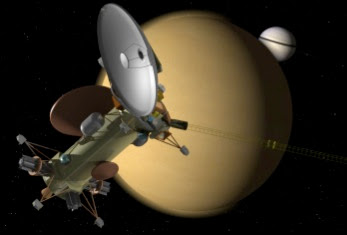
Picture 2.jpgNow sketched out as a cooperative project -- and bearing the thoroughly unattractive and clearly designed-by-committee name of Titan/Saturn System Mission -- TSSM would involve a NASA provided orbiter and a European provided lander and balloon.

That's the version I've put in my shopping cart. Not just because it is the latest, but because of the spectacular ability to generate a LOT of science. Not just one moon, but during the tour the fascinating planet of Saturn itself, the beautiful ring system, the icy and dynamic Enceladus, and the various other smaller moons.

I just hope that Bank of America will up my credit limit, because the bill's going to be a big one.

Is this any way to run a robot?


Now I don't mean to speak ill of the very hardworking folks behind the Mars Phoenix lander, but I"ve watched the events of the past few weeks since the landing of Phoenix with an increasing conviction that they don't quite know what they are doing.

Compared with the smoothly methodical -- measured but adventuresome -- progress of Spirit and Odyssey, Phoenix appears a bumbling but lucky buffoon. WIth a sampling system that appeals to require soiling itself, Phoenix is now covered in piles of dirt. Suffering from the mysteriously "out of specification" doors, the critical TEGA looks more like a science fair project that requires the flick of a hopefully-not-noticed finger to operate correctly when the teacher comes buy to issue grades and ribbons.

Now not all of this is necessarily the fault of the engineers and scientists. The soil of mars isn't what was expected. Apparently more couscous than dry flour. The instruments were built, mothballed, and updated over a decade's lifespan.

But such brittle design and superficially haphazard operation causes me to raise an eyebrow. If you're going to an alien world, to an ice pack region that has never before been explored. why make assumptions about the quality of the soil> If you've got years of time to re-test and review your instruments, why should there be unexpected questions? Instead, all the focus was on the EDL systems, the (eventually scrapped) guided re-entry system, the range finding radar, the braking rockets, the potential for interference from the descent imager that eventually cost the project any contextualizing airborne photographs.

This last is a problem I see all too often -- a fixation on the expected or known problem to the detriment of areas unsuspected of posing challenge. Engineers knew that there was a potential for Phoenix to suffer descent phase problems. That's what did in the similar Mars Polar Lander almost a decade ago.

But the other aspects -- at least from my outsider's perspective -- seemed to be taken for granted. TEGA had been built for another mission and was, therefore, regarded as a proven system. The sample delivery system had been developed for another mission and was, therefore, regarded as a proven system. The fact that those other missions never flew or crashed before any operating experience could be gained seemed easy to ignore.

Another classic mistake was made -- though I have yet to hear of any repercussions -- that of modifying existing instruments. Kludging together the proven and the novel seems a simple solution but often reveals itself a short sighted decision compared to the superficially greater challenge of a clean-sheet design. Such was the downfall of the first Ariane V launch -- in which reused software proved incapable of dealing with a novel dynamic environment and the first Delta III launch which fell to a similarly explosive fate for similar goals of false economy.

But part of the problem is just the whole messy nature of the thing. Anyone who knows me recognizes that there is a seed of fussiness that occasionally leads to inappropriate acts of dishwasher loading during social situations. But I'd like to think that this doesn't necessarily carry over to space exploration. No one is there to clear Phoenix up with a portable Dyson or some Clorox wipes. So given this fact, I would expect a design (and operation scheme) that perhaps more carefully guarded the danger of sloppy sample handing leading to contamination or interference.

I look at that sample door and can't help but wonder if, despite the much discussed out-of-tolerance components, it might not have opened a little further without that pile of dirt on top. And there is the microscope...with the same open-funnel-on-top sample collection system that prevents any ability to examine a single scoop of dirt through multiple analytical techniques. And WetChem (a name that always makes me feel vaguely dirty) suffers the same problem of preventing multi-technique analysis, an approach that is the heart of any regular systematic identification of an unknown.

The idea, again, was simplicity. Why have a complex enclosed sample distribution system, "just another thing to break" as my dad would say, when the same arm that is essential for sample collection doubles for sample distribution? But if this simplicity costs data or prevents the full us of the instrument suite, then it has failed.

So we'll see what Phoenix does for us. The data coming back is not without value. The pursuit is worthwhile. But has a false effort at economy or naive quest for simplicity jeopardized the overall return in the manner of CONTOUR, Mars Orbiter, the original design for Dawn, or (lest anyone sense a national bias here) Beagle 2?

Tuesday, July 1, 2008

A cool thing


Taking the train home today, I spotted an interesting sight. The Seattle fireboats, spraying water joyously. Then a restored USAAC crash boat (note: further research has taught me that it was a USCG 83' cutter of 1944 vintage), the Seattle Maritime Academy's old 82' Coast Guard cutter, a new Coast Guard 110 footer, and finally a big HH-60 flying low and slow over the mini fleet.

Why? We were moving along fairly quick and I wasn't so lucky as to have the window seat, but I tried to crane around. Found it! The Eagle, the Coast Guard's three masted sailing barque, with sails furled and ensigns manning the yards. Not quite Master and Commander, but about as close as you get now-a-days. I couldn't get my phone up in time to take a photo before a series of grain cars on the adjacent track got in the way.

Well, that was probably enough -- a cool sight to see.

Rockets into space


I've been a part of a few interesting organizations in my time but until now none of them has ever launched anything in to space. Jeff Bezos is trying his hand at spaceflight with Blue Origin, but all together too secretly for it to be a fun effort to follow. Elon Munsk, at least, has the audacity to webcast his failures!

But just a few weeks ago the unattractively named GLAST (Gamma Ray Large Area Space Telescope) was put into space atop a Delta II booster. Oddly, this project features a telescope designed and built by the folks at SLAC -- the Stanford Linear Accelerator Center, a 3 mile long underground tunnel and the source of much summer income for me back in college.

What's an underground pipe have to do with space? Simple -- high energy particle detectors. SLAC scientists have considerable experience in building the massive detector assemblies that are used to track collision by-products from particle colliders. Millions (I'm rusty, it might be billions now) of intersecting wire strips, carefully monitored dewars of cryogenic liquid, and massive amounts of computing power trace back the tell-tale fragments of super-accelerated particles and (hopefully) bear witness to the fundamental constituents of matter.

These things are huge. I have to dig around -- I worked there pre-digital photography -- and see if I can find any photos of the SLD, the Stanford Large Detector that was in commission while I was working there. Fifty feet on a side (or more), thousands of tons, and about as far from spaceflight as possible.

GLAST uses the same technology (sort of) to act as a highly sensitive gamma ray telescope, one larger and more sensitive than ever before. Gamma rays emanate from the most powerful and titanic events in the universe -- the collapse of stars, collisions of galaxies, accreting black holes, and all that sort of good stuff. Real Discover Channel fodder. And with plenty of good potential for real science -- these events achieve conditions well beyond anything we can create here on earth, even with massive devices like the LHC and its kin. So while we can't study these fuzzy patches between quantum theory and relativity directly, we can observe what goes on out there in the galaxy, where nature creates a laboratory of unsurpassed energy.

Even more prosaic events have their signatures in the gamma ray, either in transmission/absorbtion or emission. The result is that GLAST is a mission with the potential to answer questions about stellar evolution, dark matter, dark energy, relativity, quantum theory, cosmology, and probably a few other fields that I haven't thought of. This is as much because gamma rays are hard to study as because of the sheer power of GLAST. Its a tough area of the spectrum -- effectively un-focusable, gamma rays can't be detected in any of the intuitive ways. No lenses, no filters, no focal planes will work in the telescope-and-camera paradigm.

Instead, GLAST's unique detector tracks the impacts of gamma rays as they pass through the detector. Yes, through. These guys have so much energy that they don't get bent by lenses, selected by filters, and finally give up their energy in a detector's sensitive well. Instead they pass through the detectors, briefly interacting and producing collision products that are themselves tracked and measured as much as the original photon is!

And perhaps now you understand why a bunch of physicists, and not just astronomers, have had so much to do with GLAST.

But now we will have to wait for the first data release -- expected about a year after launch. GLAST data is quite non-intuitive. Tracking all these collision histories back requires serious computing power and produces a database of events rather than a traditional image.

When it comes, this data will confirm, shatter, and modify theories. It will inspire new rounds of conceptual thought and new generations of thinkers. This project has all the potential to be one of those little gems that gives well beyond its initial scope. I just hope they hurry up with the promised re-naming ceremony and give me something more interesting to say and easier to type than GLAST!

What's perhaps more interesting is that, to the best of my knowledge, GLAST is the only spacecraft to have had an orchestral piece composed specifically for it.